Flying High
When’s the last time you rode in an airplane? How about the last time you sat in the pilot’s seat?
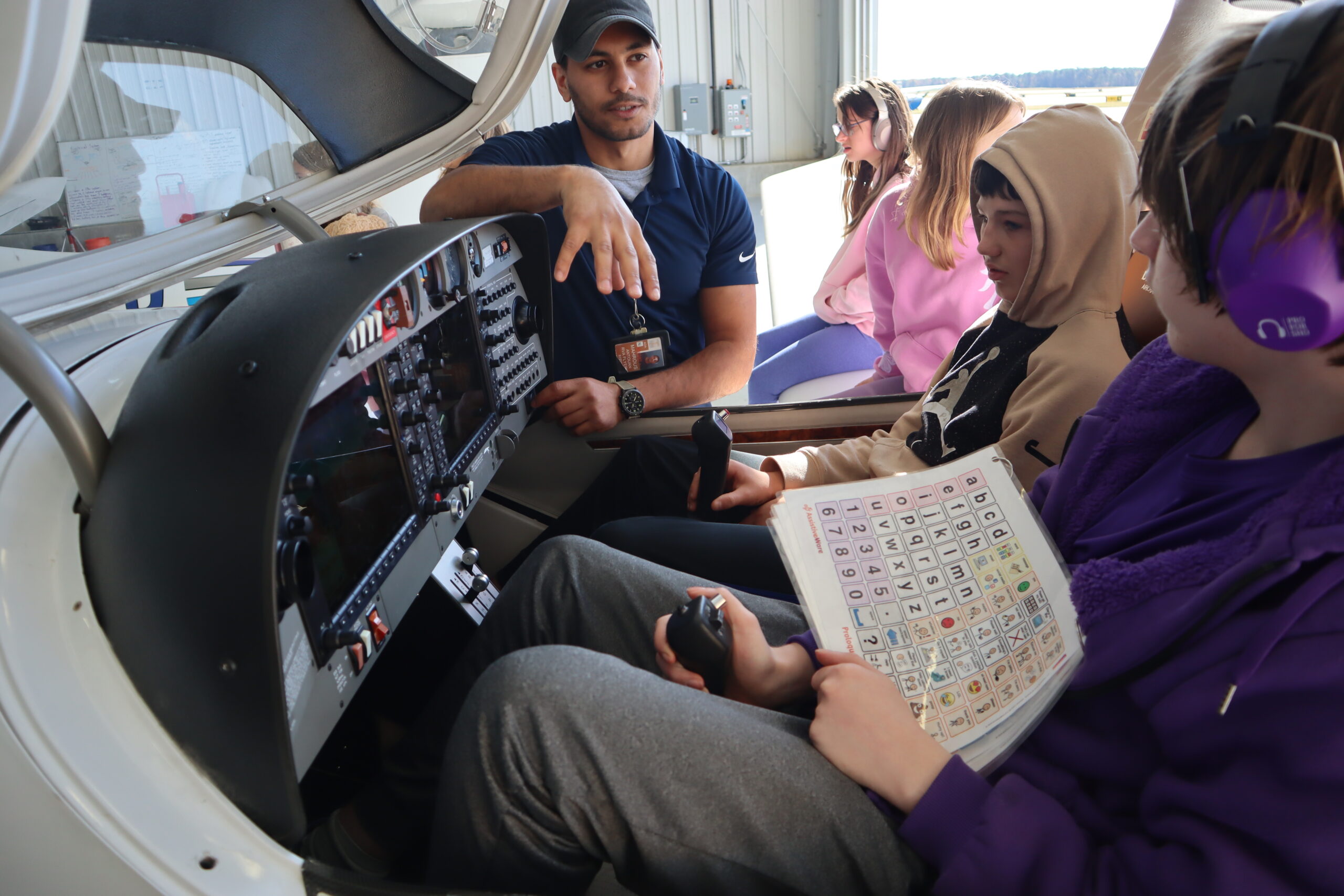
Recently, Ms. Kiki’s Geography class took a field trip to the Richmond International Airport, where they got to get up close and personal with aircraft and the processes that make it possible for us to fly.

The first stop of the field trip was RVA Flyers, a flight training center where new pilots learn the skills to earn their private or commercial license. Tony, a flight instructor who led the tour of a small hanger, assisted students in climbing into a small four-seater plane, where they learned about the many controls and buttons.
“We use these planes to teach new pilots,” explained Tony. “You need to be at 17 years old and log at least 40 hours in the air to earn your private license.”

“In the plane you could move the joystick and press the pedals and the tail would go back and forth,” said eighth grade student Laureli.
After touring RVA Flyers, students got a private tour of the air traffic control tower.
From the 6-story tower, they got a birds-eye view of the entire airport complex. Workers pointed out a side of the airport not typically shared with passengers, such as the fleet of deicing vehicles and ongoing capital improvements to RIC’s airfield.

“I really liked seeing the monitors,” said Hunter, eighth grade, about the experience. “We saw a cargo plane and a big jet landing, too.”
Between answering student questions, they shared their day-to-day tasks. As one controller shared, “The busiest times are when the weather is clear in Richmond but bad in surrounding cities, because all those planes get redirected to us!”
While watching planes take off and land, students learned the basics of how to read radar equipment and dabbled in speaking with the ICAO phonetic alphabet (Alfa, Bravo, Charlie, Delta, etc).
Northstar students love going off campus and exploring learning opportunities beyond the classroom!
Students Lead the Way in Recycling
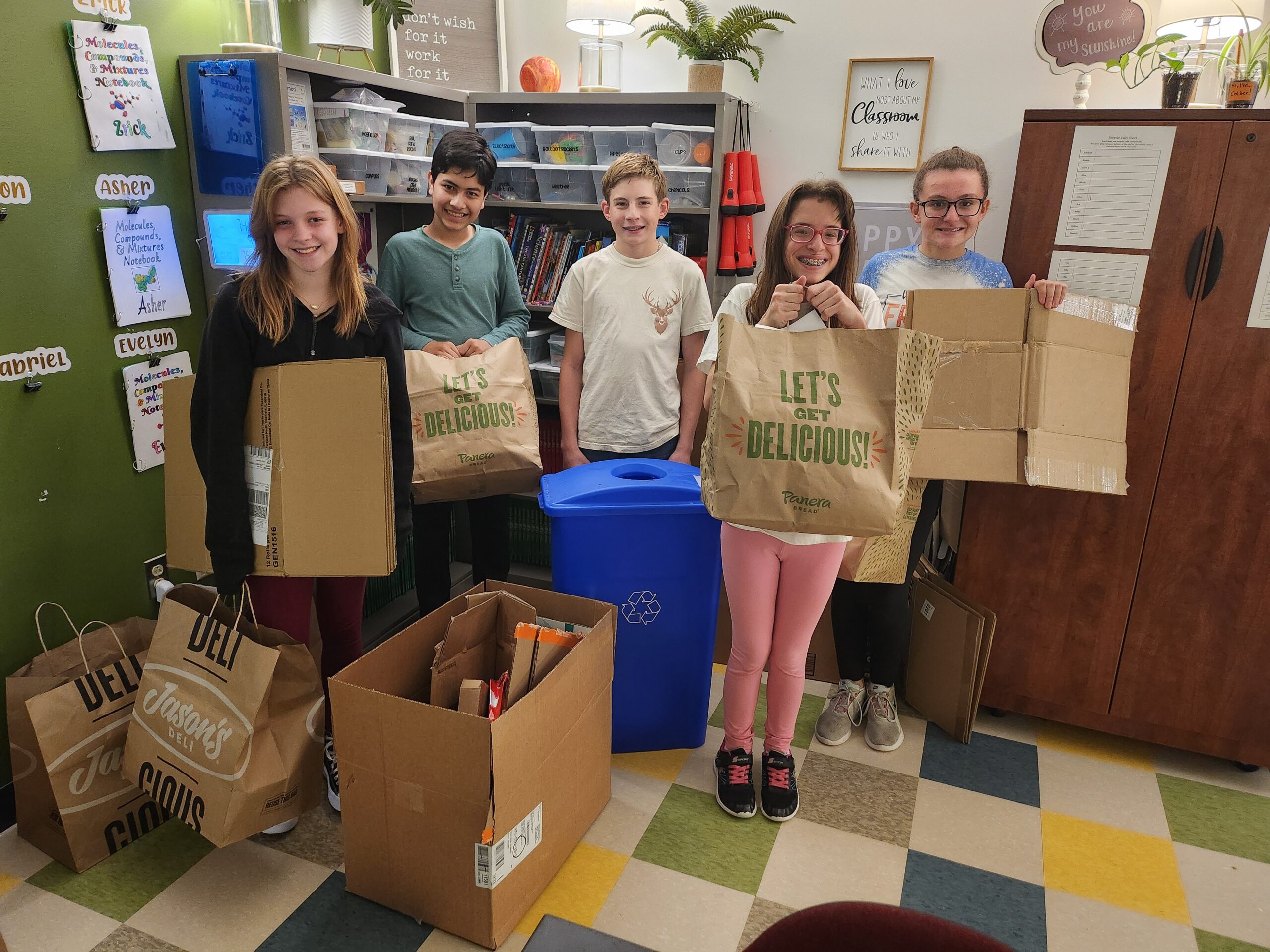
At Northstar, learning doesn’t just happen in the classroom — it happens in the hallways, the lunchroom, and even by the recycling bins. Thanks to a student-led recycling initiative, our middle school students are taking the lead in reducing waste across campus while gaining valuable vocational and life skills.
Led by middle school science teacher Isabel Futterman, the program has become part of both the curriculum and the culture at Northstar. Each week, students collect recyclable items — plastic bottles, paper, and cardboard — from classrooms and common spaces. They sort, organize, and prepare the materials for transport to local recycling centers, turning what could have been waste into a lesson in responsibility and environmental stewardship.
Recently, the program received a boost through a Green Grant application. This helped purchase new recycling bins, including a triple-sort station for the new gym and community room. These additions make recycling even more accessible for students and staff. The multiple locations remind us that sustainability is everyone’s responsibility.

“Hooray!” Ms. Futterman commented about the update, “Students now have sorting bins across campus for cans, bottles, and paper products. It’s a small step that makes a big difference — and it’s led by them.”
The impact is already visible. From the office to the library to the lunch room, new blue and grey bins are in place, giving students a hands-on role in keeping our school green.
The program also gives students the opportunity to hone their social skills. When visiting offices and classrooms to collect bins, they practice proper entry etiquette. This includes knocking politely, waiting for the okay to enter, and asking if they can step in to take care of this week’s recycling.
For our students, this initiative goes beyond recycling. It’s about building executive function skills like organization, planning, and teamwork. It’s about practicing leadership and community service. And it’s about recognizing that even small actions (like choosing the right bin) can add up to meaningful change.
At Northstar, we are proud of the way our students are learning to care for the world around them, and we look forward to seeing this program grow. After all, sustainability is not just a lesson for today — it’s a skill for life.
Math: A Lesson in Timing
Timing is everything - whether you are running a race, buying the last shirt in your specific size, or meeting your life partner. It’s also true when it comes to learning math.
The pace at which educators teach students with disabilities can be a critical factor in how well they process information and make connections to “get the right answer,” says David Rosko, who teaches high school Calculus and Algebra at Northstar Academy & Career Center.
Rosko watched this play out over and over while teaching in Chicago and Virginia public schools, where math is taught at a brisk pace.
“When I first came here to Northstar, my pace of teaching math was a shock for the students, so I had to scale it back a little,” Rosko explains. “We’re still doing all the content required by Virginia’s SOLs, but the pace is slower."

Math Curriculum + Family Input + Problem Solving = Success
Northstar’s curriculum meets Virginia’s Standards of Learning (SOLs). That’s a starting point, according to Rosko. Setting expectations and scaling them to support individual levels and goals involves good communication with students and families. It's something he believes Northstar does well.
“There is a flexibility for different teaching styles and a community of support that is different here,” he notes. “This is also a place where a teacher with a softer touch is a great fit for students.“
Northstar students also have an important advantage with small class sizes. While public school system classes commonly reach upwards of 20 - 30 students in a class, the student:teacher ratio for special education classes is capped at 8:1.
“That’s when you see the students and their families struggle,” says Rosko, who knows the pattern well, not just as an educator, but as a father who raised two children on the autism spectrum.
“We know having a child with a disability is difficult. It’s stressful on the whole family,” he says. “At Northstar, we want you to feel supported and comfortable.”

Experience and Agility Guide Hands-On Teaching
Middle-school teacher Edna Heinig has taught math for 26 years 一 15 years at Northstar. Her experience and flexible teaching methods enable her to change course rapidly. She recalls years in which each student in her class was operating at a different instructional level.
“I have the flexibility to teach differently, to provide a 1:1 approach when it comes to teaching strategies and pace," says Heinig. For instance, she explains, what might take two weeks to teach in a standard public school class may take four weeks to teach at Northstar. “We can work at their pace. Whatever is in the best interest of the child is most important.”
Heinig’s overall teaching philosophy and goal is to use math as a way to teach students how to pay attention to the details, follow instructions, and learn social skills through collaborating. “Math can help students learn to get along with others and help them acquire skills to survive in the world outside of Northstar,” she says.

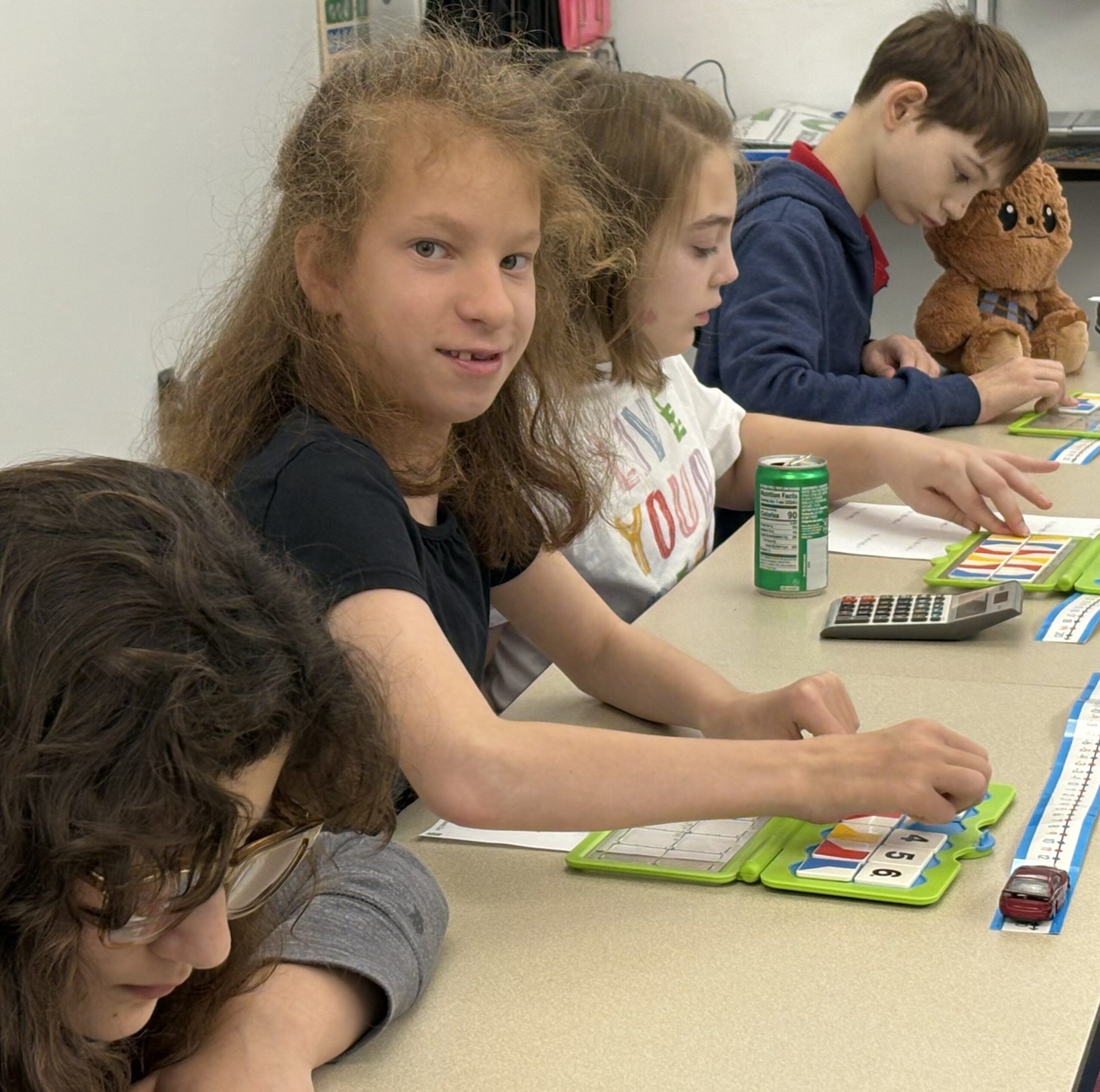
One of Heinig’s favorite teaching methods which she finds “very effective” for middle school learners is the use of manipulatives. These tools integrate the thought process and the creative use of physical objects to solve math problems. This includes hands-on work with connecting objects similar to Lego blocks, tape measures with negative numbers for counting and applying the right answers to math problems to create new designs.
“The students are learning,” she says while demonstrating the use of manipulatives. “I use it every day and the students love it.”
Student-Led Service Project Takes a Bite Out of Hunger
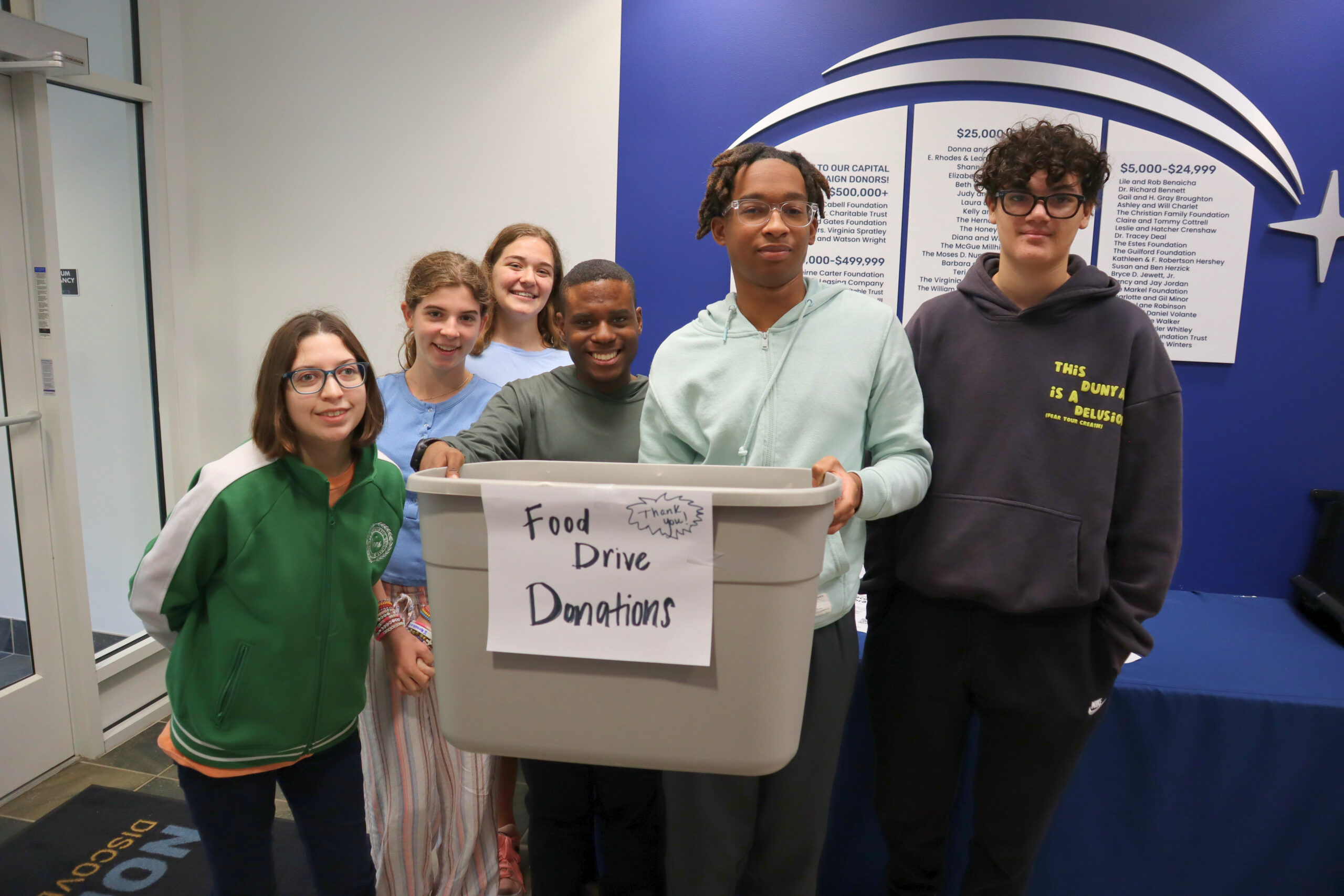
When tasked with coming up with ways to be involved in the community, the group of upper schoolers decided as a class that they wanted to make a positive change in the form of a food drive.
Advisory is part of Northstar’s proprietary program focused on refining social skills such as personal responsibility, effective communication, coping skills, and self-advocacy. Each month has a different theme. Ms. Lynch’s Advisory class is embracing the monthly theme of “community” with a special service project.

Students discussed a number of ideas such as a hygiene campaign, clothing/coat drive, or even a dog toy collection for a local shelter. Ultimately, the class landed on a food drive.
“This kind of drive is more accessible,” says 9th grader Emerson about the winning idea. While not everyone could have means to donate a coat, donating an extra can of food is relatively inexpensive in comparison. Plus, food drives are a common, recognizable charitable project and are simpler to organize and advertise. The initiative aims to provide relief to families facing food insecurity in Richmond.
“We talked about what it means to be food insecure,” says English teacher Ms. Lynch, who is leading the initiative. “We can empathize with less fortunate people in our community and help them in a tangible way.” The USDA defines food insecurity as an economic and social condition of limited or uncertain access to adequate food.
"It feels good to help people who need it in our community," says 10th grade student Barrington.

When the collection period is over, all donations will be given to Feed More, a local food bank. Feed More distributes prepackaged and cooked meals to people facing food insecurity across 34 Central Virginia districts. Nonperishables, such as canned foods, dry goods, condiments, and spices, are welcome donations. The organization asks for any snack-like donations to be nutritious.
“The food has to be healthy,” says 9th grade student Evelyn, “So no candy, please.”
Donations will be collected through October 7th.
Scouts on the Scene

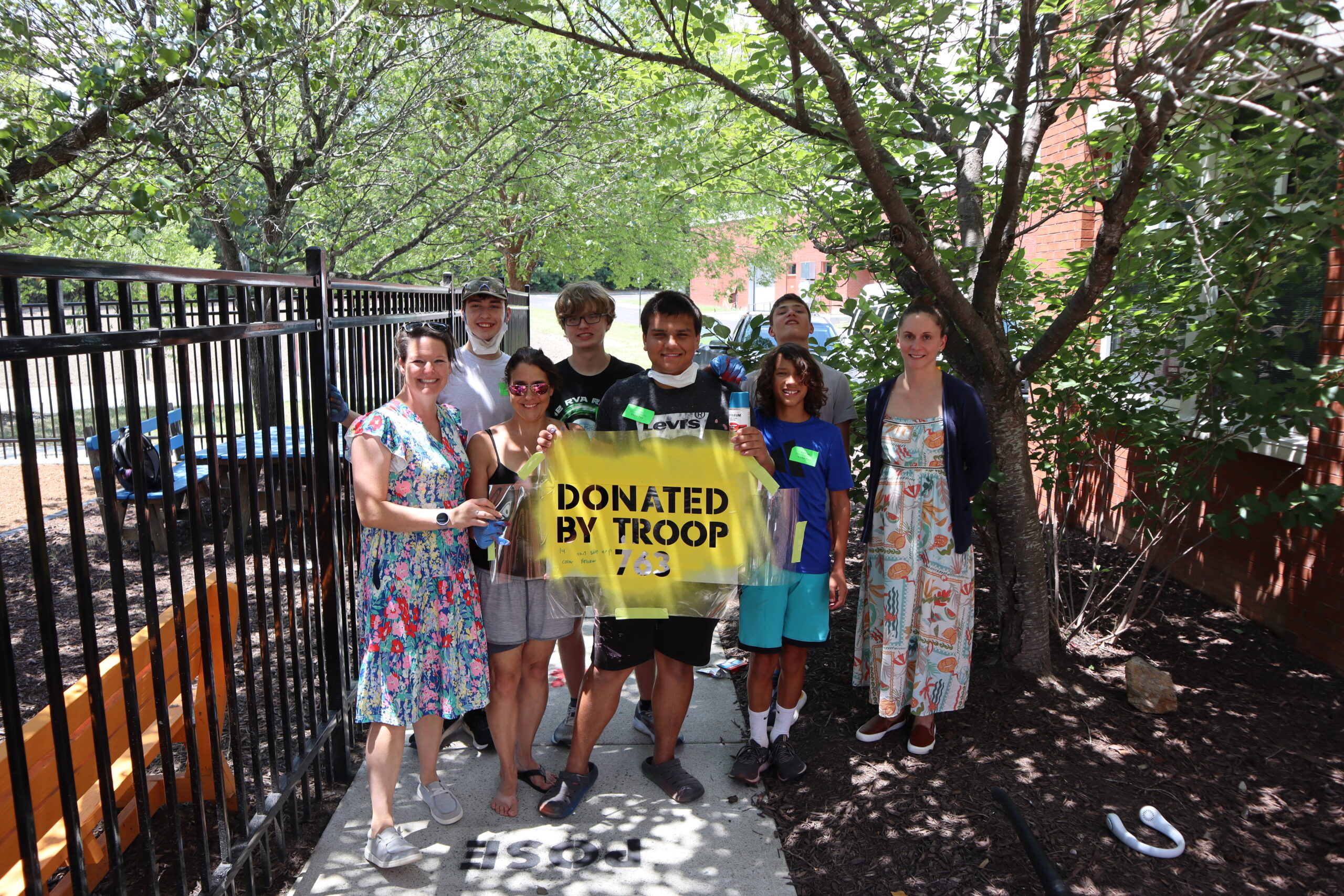
A huge shout-out to Max from Boy Scout Troop 763! For his Eagle Scout project, Max has given Northstar something truly special that our students will enjoy every day.
At 17 years old, he wanted his project to make a real difference. “My brother went here, and around that time I started thinking about Scout projects,” he explained. Max, who enjoys woodcraft and working with his hands, commented, “After talking through some options with the Head of School, we decided to do a sensory walk.”
With stencils he and his crew of volunteers designed and printed, Max turned an ordinary stretch of sidewalk near our playground into a colorful sensory walk. The first step was power washing the nearly 300 feet of concrete to clear it of any debris and prep the surface, then lay the stencils and spray paint the activities in vibrant colors. Along the path, students are prompted to crab walk, spin, touch their toes, jump, balance, and more. Sensory walks are great ways for students to incorporate movement during the day while taking a break from the classroom. The exercises are fun, but they also help students build coordination, practice motor skills, and even regulate their bodies.

Max shared that his favorite part is the balance beam section. He also hopes the project has a long life here at Northstar. “I hope it lasts as long as it can and that kids like to use it,” he said.
The Eagle Scout project is a significant milestone — it represents not only years of Scouting but also the ability to plan, lead, and complete a meaningful service project that benefits the community. Max’s work is an example of how young people can leave a lasting mark while learning leadership, responsibility, and teamwork.
Already, students are eager to try out each new challenge, and teachers have noticed how much joy it brings to recess, P.E., and even quick brain breaks. What was once just a sidewalk is now an interactive space where movement and learning come together.

A Peek Inside Business Technology
In the 21st century, technology is no longer just a tool. It is a fundamental skill area for personal and professional success. For students with diverse learning needs, mastering business technology can be a transformative experience. They unlock opportunities for independence, employment, and personal growth. At Northstar Career Center, we believe in the power of individualized instruction to meet every student where they are.

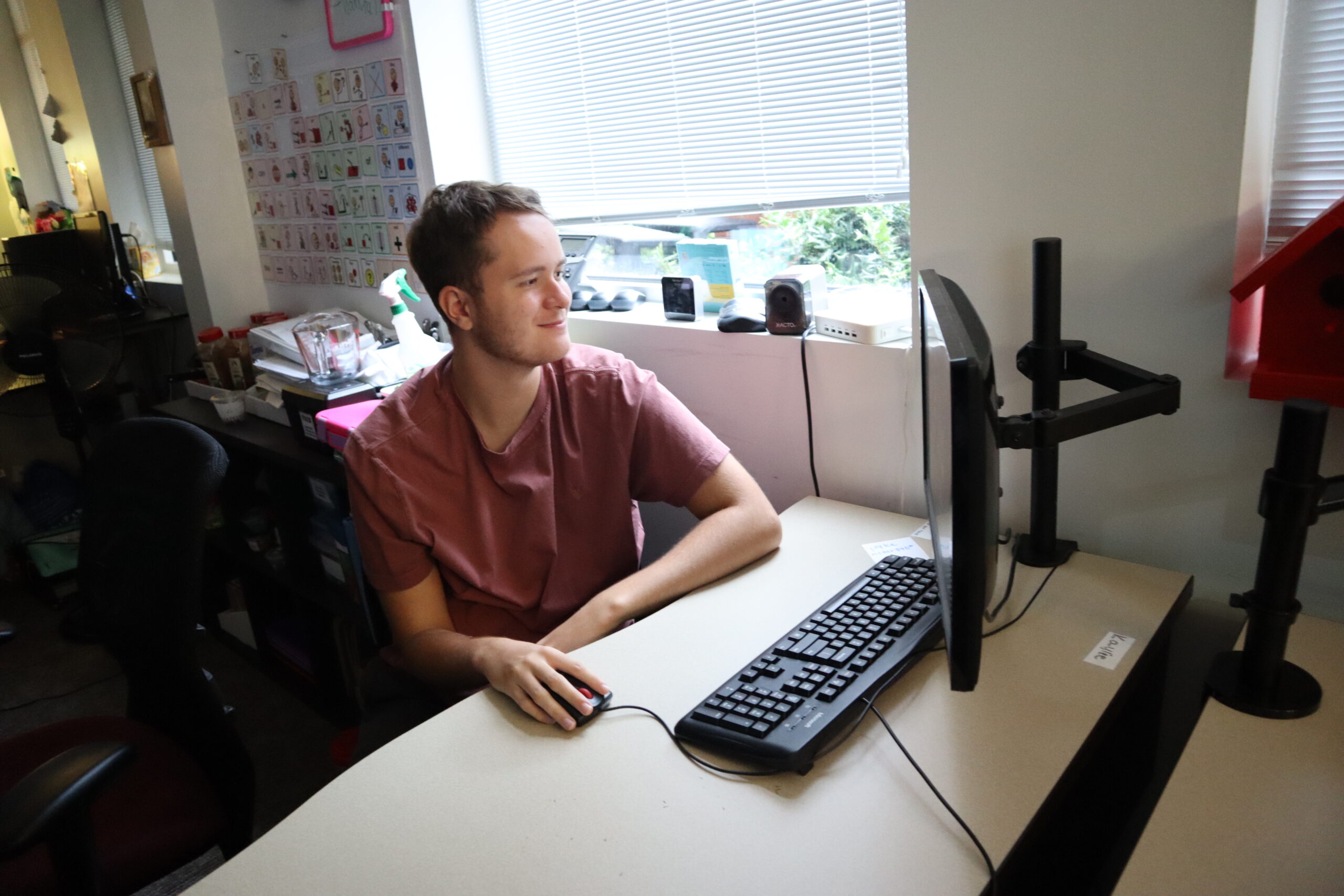
When you step inside the Business Technology classroom, you may notice some things are a little different than a traditional classroom.
Northstar leverages assistive technology to create access for all learners. For instance, a student whose physical disability prevents them from typing with a standard keyboard may instead use voice-to-text software or an adaptive keyboard.
We offer choice in how students show their knowledge. For example, a student might pre-record an oral report using an AAC (Augmentative and Alternative Communication) device instead of presenting live. This allows them to demonstrate their understanding in a format that plays to their strengths.
Each student works towards their own unique goals. We know that no two students learn the same way or at the same rate. In the Business Technology program, a student’s goals will differ depending on their unique strengths or challenges. For example, one student may be working towards the objective to send and receive professional emails independently. Meanwhile, their peer sitting beside them may be working towards the goal of demonstrating understanding of all the hardware components of a computer.
This practice of individualized instruction allows for flexibility in the classroom. It involves a responsive cycle of teaching and assessment. We are constantly monitoring each student’s progress to ensure they are meeting their goals and building skills.
The Lesson Matches the Learning
Northstar’s program relies on the principle of scaffolding. Teachers start building a foundation of basic skills, then gradually introduce more complex concepts. In a lesson about encryption, we are able to see these methods in action.
First, students learn about how spies use codes to send encrypted messages. Each student builds their own cipher wheel, complete with letters, numbers, and symbols. Then they write encoded messages made with their own unique cipher and were tasked with unscrambling each other’s notes.
“A lot of computer tech is abstract,” says Business Technology teacher Cynthia Izac on the lesson, “so I try to make it into something we can see and feel.”

With a grasp on basic encryption, students then learn about its real-world applications in the tech world. End-to-end encryption is a communication security method where data is encrypted between the sender and receiver, making it unreadable to third parties. The U.S. Department of Justice calls encryption "an existential anchor of trust in the digital world" and stresses the importance of its part in protecting digital privacy. Because this kind of intangible concept can be difficult to understand, a hands-on activity can help our brains make a connection.
Scaffolding breaks up curricula into bite-sized segments. This lesson on encryption leads into more complicated concepts, such as the binary numeral system and data management.
“That’s what teaching is,” says Izac. “It’s students getting comfortable with the basics and then building and building on top of that.”
By supporting inclusive education and meeting students where they are, we can help all students find their path to success.
Why Does It Matter?
Digital literacy is not just a convenient skill — it is essential for navigating today's world. For students with learning differences, it’s a key to future employment and self-sufficiency. Our Business Technology program empowers students to feel confident and capable by:
- Teaching broad job skills like navigating computer systems and using email.
- Connecting tech skills to real-world examples that prepare students for the demands of the modern workforce.
- Empowering students so they can use tools to communicate, create, and problem-solve.
At Northstar, we believe that every student has the potential to thrive. Through individualized instruction in our Business Technology program, we celebrate the uniqueness of each learner. We equip them with the skills they need to build confidence, capability, and a bright future.
Duck, Duck, Go!
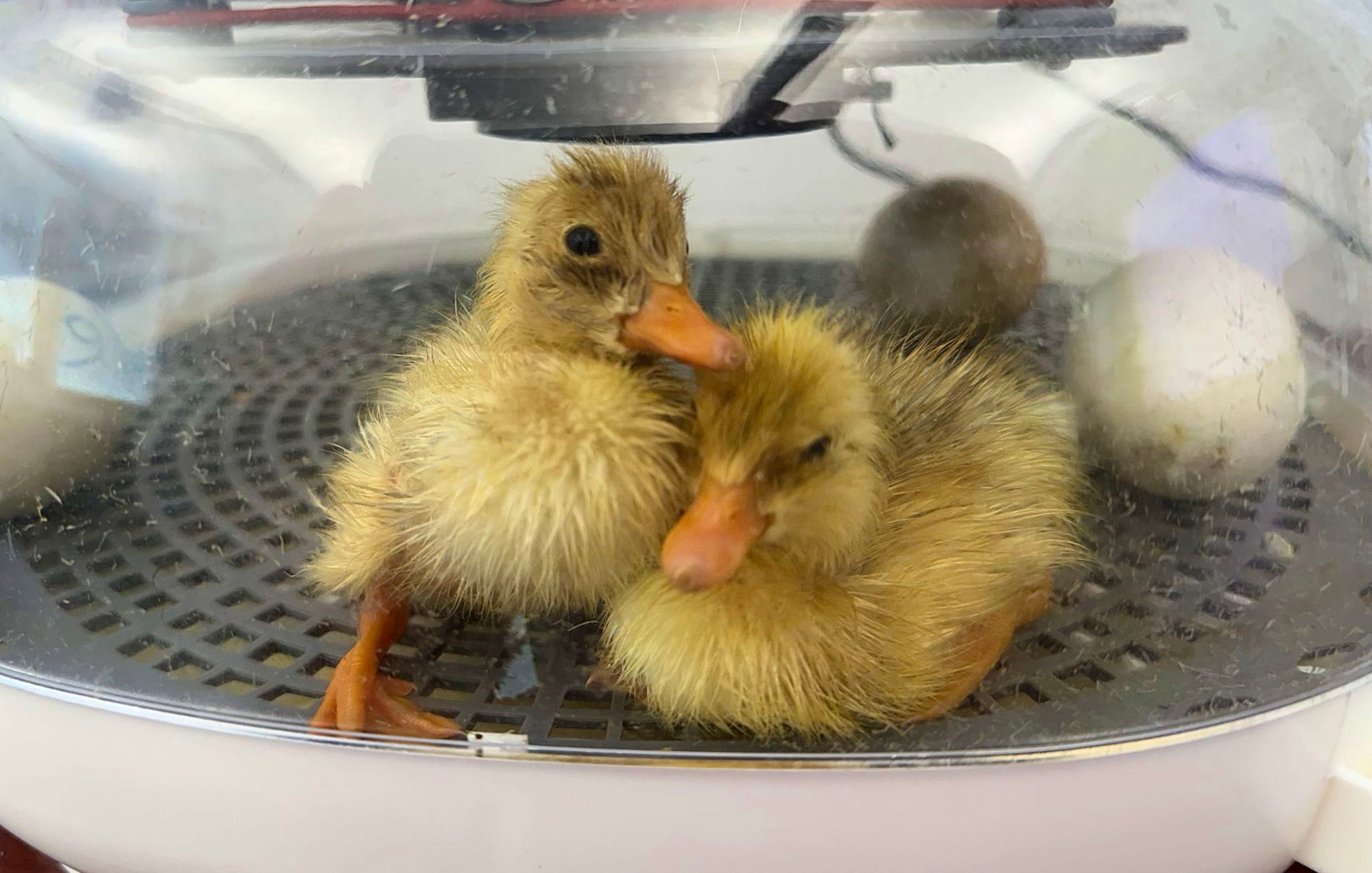
What’s yellow, fuzzy, and oh, soooo cute? Ducklings, of course!
The incubation and hatching of these cute little things is a rite of passage at Northstar Career Center where embryology lessons are hands-on.
Each year, Henrico County 4-H provides the Career Center with a dozen fertilized eggs. Students of the Veterinary Assisting program care for the eggs until they hatch into ducklings. The project starts with the students setting up an incubator to track embryo growth over a two-week period during the Spring. Using a candling technique in which they shine strong light under the eggs, they watch the shadow of embryo growth underneath. When the time is right, students witness the eggs hatch and follow their progress as they “fluff up” with feathers.

"Specifically with the Embryology project, I love to do ducks! 4H gives us all the supplies needed and work with local farmers to get eggs," says Tricia Doria, who heads up the school’s program. "My students get to name their duck if hatched. They usually almost double in size in 10 days."
Once the ducklings’ coats change from fuzz to fluff they’re ready to swim. Veterinary assisting students take the lead in teaching their fellow K-12 students and sharing their experience with the embryology project. Seated around a baby swimming pool, they take turns fielding questions about the care and feeding of juvenile water fowl.

The Veterinary Assisting program is not for the faint of heart, nor is it for every student. Not every duckling hatches from an egg and not all of those that do will survive. Some years, only a quarter of the embryos may make it. The program requires students to build tolerance for varying environmental conditions, and a willingness to deal with the dirtier side of nature such as odor and excrement.
While working with animals can be a physically and emotionally demanding job, the field is projected to grow at a rate of 19 percent by 2033, according to the Bureau of Labor Statistics. When Northstar graduates exit the program, they have real world work experience and are prepared to work in clinics, animal hospitals, and research laboratories.
When the ducklings are just ten days old, they are returned to Henrico 4-H who distributes the ducks back to local farmers.
Teen Volunteers Embrace Northstar with Big Hearts
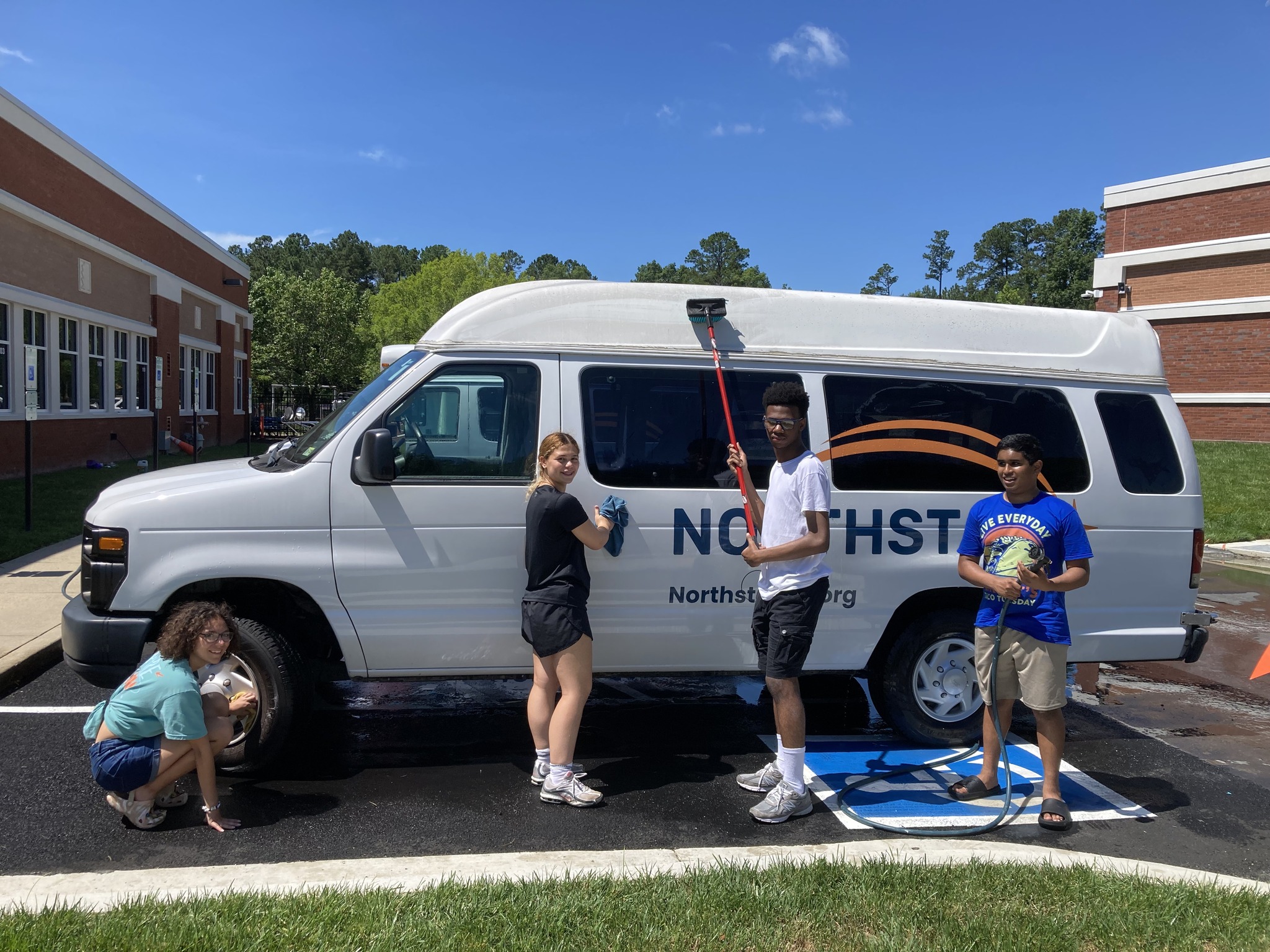
A volunteer group of six teens and two adult chaperones gather in the sweltering parking lot of Northstar’s campus on this mid-June morning. They don rags, cleaning supplies and water buckets as they detail buses and vans used to take students with disabilities into the community.
“We need someone tall to hose the top of the bus. I can’t reach up there,” the young man says as he gingerly sprays a taller teen with the hose. They both giggle.
“We need more rags, please,” a girl says to anyone who will listen.
Undeterred by Virginia’s heat and humidity, the teenage volunteers joyfully sing, laugh, and playfully coach each other as they work on the task at hand.
For three days, these teens work through a robust task list that includes painting a large storage unit, cleaning and moving furniture and landscaping. Each task addresses a need and directly impacts Northstar special education students, while helping the school reset and prepare for the upcoming school year.

“Our goal in addition to completing the tasks was to raise awareness about why individualized education is important for students with disabilities,” Director of Development Susan Herzick says, "The campers were enthusiastic about helping. They asked questions about the task, but also about the students.”
The teenage volunteer work group that visited the Glen Allen campus were among about 250 teenagers and adult chaperones who participated in Catholic Hearts Work Camp-Richmond. They hailed from Massachusetts, Pennsylvania, Delaware, Maryland, North Carolina, Michigan, Wisconsin and Ohio to strengthen their faith and help the local community, explains Program Manager Caryn Fresco, a special education teacher and tutor for over 30 years.
“We provide a safe opportunity for teens and adults from across the country to convene, love, serve, and connect not only with their faith but with organizations or deserving individuals in our metro-Richmond community,” Fresco says. The teen and adult campers eat, sleep and attend morning and evening faith-based programs at Benedictine Schools of Richmond.
The local camp is an outgrowth of the mission trips hosted by Catholic HEART Workcamp, which was founded in 1993 by Steve and Lisa Walker in Orlando, Florida. A group of teenage boys on return from a mission trip, notes Fresco, initially pitched the program to “share their faith and community service commitment” in Central Virginia.
Northstar welcomes volunteers and offers one-day and event volunteer opportunities.

P.E. Class Gets a Refresh
Northstar staff are great at adapting. With the addition of new gym equipment, Northstar’s P.E. teacher, Ms. Pigg, will have the tools to customize her curriculum. Because of the generous support provided by the Women’s Giving Circle, a fund of the Catholic Community Foundation of the Diocese of Richmond, she has the equipment she needs to help our students learn and thrive.

While traditional physical education goals can fixate on athletic ability, Northstar's daily P.E. activities are adapted to meet the needs of every students. Northstar has invested in new equipment with student success in mind. Tools such as yoga mats, varying size balls and birdies, and even the color of the volleyball net have been purchased with student success in mind.
- Multi-size balls help students with developmental delays or differing skill sets in the same class. It also gives students the chance to first build their confidence with an easier-to-grasp ball, then gradually move to into standard equipment.
- A bright orange volleyball net assures students with visual impairments can see the net while playing, and special jumbo-size badminton birdies allows students to clearly track them in the air, helping with hand-eye coordination.
- New mats for yoga lessons help our students practice mindfulness, emotional regulation, and strategies for coping that are crucial for students with disabilities.
- Additionally, organized and clean storage units ensure the long-term sustainability of this equipment.
This equipment has also allowed Ms. Pigg to be creative during P.E. class. During the 2024-25 school year, lower school students played a version of “Battleship" in the new gymnasium. This game, involving mats, scooters, and balls, was an fun way to practice sportsmanship, teamwork, balance, and dexterity. Varying sizes of balls are used, allowing the game to accommodate students with differing muscle tone and gross motor skills.
Thank you again to the Women’s Giving Circle for providing invaluable support to Northstar students!
Pomp and Circumstance for Graduates
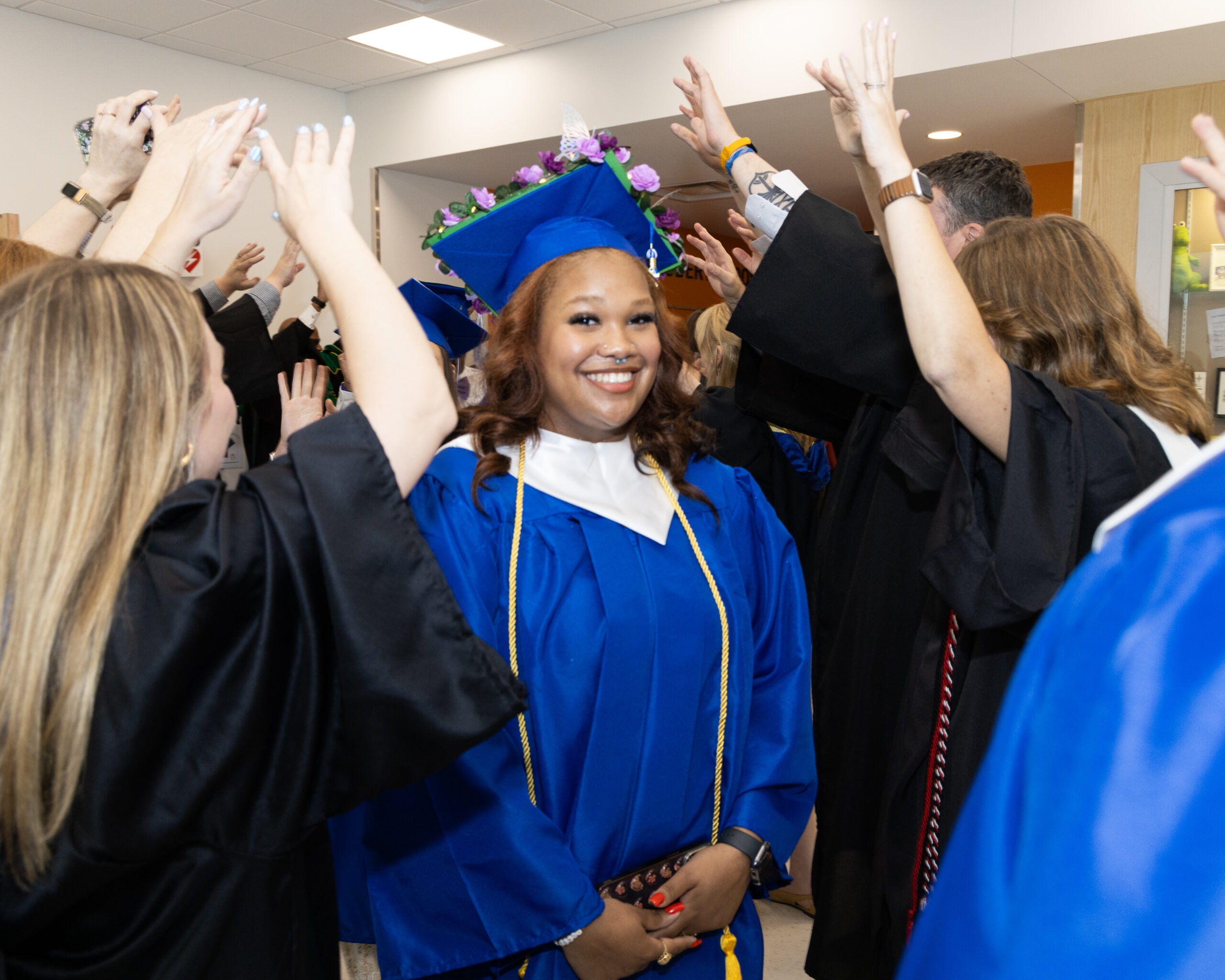
The staff and faculty of Northstar are pleased to celebrate the remarkable achievements of the Class of 2025. On Thursday, June 5, students, families, and loved ones gathered in the gymnasium and community center to honor nine graduates from the Academy and 21 students who completed their programs at the Career Center.

"Throughout their years at Northstar, our students work tirelessly to reach their goals and pursue their dreams," said Wanda Ramsey, Assistant Head of School.
One of Northstar’s most cherished traditions is the senior essay. In the weeks leading up to graduation, every senior reflects on their educational journey by writing a personal essay. In them, they describe past challenges, growth, future plans, and the people who have supported them along the way. Each candidate takes the podium to share these heartfelt stories during Baccalaureate, a special ceremony held the evening before graduation. This year, Northstar's family volunteer group SCOPE (Seeking Careers, Opportunities, Possibilities, and Education) awarded two students, Maya and Bryan, with scholarships to support their next educational adventure.
"Since being at Northstar I've improved my reading by at least four grade levels and passed all the tests I needed to graduate. I've also gotten to work as a mentor for one of my classmates whose disability impacts her differently than mine. Being at this school with classmates with so many differences has made me a lot more empathetic and understanding . . . . I want to use my voice to advocate for people like me when it comes to people with learning disabilities and mental health. I want to show everyone else who has a disability like me that they can be successful and they can chase their dreams."-Maya, a 2025 graduate
At Northstar, we believe every student deserves a customized education tailored to their unique strengths and abilities. Graduation day is not just a milestone — it’s a celebration of the incredible journeys, hard work, and perseverance that brought each student to this moment. Our students have the flexibility to pursue various pathways, with options to earn an advanced, standard, or applied studies diploma, reflecting their personal goals and accomplishments.
Our graduates also earned a variety of credentials across Career Center's five specialized program tracks: Hospitality, Construction and Maintenance, Business Technology, Materials Handling, and Veterinary Assisting. Each credential represents dedication, skill-building, and workplace readiness for exciting next steps.

Congratulations to the incredible Northstar Class of 2025!