A student walks with a staff member on the first day of school.

First Day of School Survival Kit

Are you new to Northstar? Nervous about your first day? Whether you are joining us in August or enrolling in the middle of the school year (yes, we do have rolling admissions) here are some handy tips to make your first day a good experience.

A student walks with a staff member on the first day of school.

1. Dress to impress. Wear something that makes you feel comfortable and confident. Remember that students do not dress out for P.E. class, but should have appropriate, closed-toed footwear. The most updated dress code can be found in our list of downloadable family resources.

2. Prepare to make friends. Come with your best smile and be ready to say hello. During morning arrival, students hang out together in common spaces before class starts. You can use this time to chat and socialize with your peers, relax, and prepare for the day.

3. Know where you’re going. Don’t be afraid to ask for directions or ask for a visual schedule to help you navigate the halls.

4. Get to know your teachers. At Northstar, we create communities in every classroom. Our teachers work hard to build relationships with every student, create a safe learning environment, and ensure a network of academic and social support.

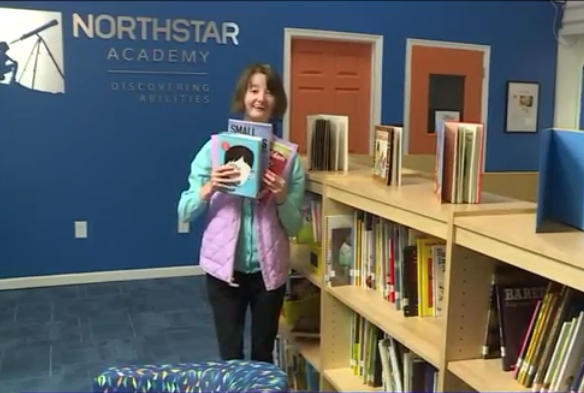
A student sits in the library during a speech therapy session.

5. Take breaks. Get a drink of water, grab a fidget toy, or go for a lap around the hallway. At Northstar, we understand every student needs different tools for success.

6. Meet your liaison. Every student has a dedicated IEP Liaison assigned to them. These individuals work with public school representatives, teachers, administrators, families, and students. If concerns or challenges arise, students can visit their liaison during the school day.

7. Take a deep breath. It’s okay to feel nervous. Everybody gets first day jitters – even your teachers! Be kind to yourself and celebrate your successes as they come.

8. Be yourself. You have special gifts and unique strengths. We’re glad you’re here, and we like you just the way you are.


A middle school student works with her teacher to complete a reading worksheet during summer session.

Dog Days of Summer School: Northstar and ESY

Did you know Northstar has Summer School?

Each July, we host a three-week educational program here on campus. General course offerings include Writing, Reading, Math, and Social Skills, as well as Specialized Reading. Students can join us for the whole time, or families can choose to enroll for just one or two. Because learning loss, or the “summer slide” can occur during the summer months, this special session aims to help reinforce and retain academic and social skills learned during the school year.

A middle school student works with her teacher to complete a reading worksheet during summer session.
Specialized reading classes may focus on decoding, the ability to translate written word to spoken language, or comprehension, understanding how to connect words to meaning.

Summer school isn’t limited to currently enrolled K-12 Northstar students; students with disabilities from the general public who meet our basic admissions criteria are also welcome to attend. In fact, summer school is a great way for new families to get to know Northstar in a relaxed, but structured environment. This short session can help families understand how our faculty approach core subjects through the lens of special education.

You may have heard this kind of summer program also be referred to as Extended School Year, or ESY.

ESY is a specific term used by the Virginia Department of Education to describe special education and/or related services that a school provides beyond the typical school year. Determining if a child needs ESY services is part of the IEP writing process. The IEP team, which includes families, teachers, and other professionals, will evaluate if the benefits a child gained during the school year will be significantly jeopardized without ESY.

So which is it? Northstar Summer School, or Northstar ESY? Answer: it’s both!

A teacher smiles at a U-shaped table of upper school aged students during Summer Session.
Attending a summer session can help students keep math and reading proficiency fresh as well as allow them to practice executive function and study skills.

Northstar’s summer session satisfies the Virginia ESY requirement by providing individualized lessons to meet a student’s unique needs. Some families enroll through their local education agency or school district to receive these necessary services. Regardless of the reason they come, all summer session students learn together in the same core classes.

If your family is looking for a summer program to retain academic skills and engage in social activities, we invite you to explore what Northstar’s summer session can offer. Admission for summer session opens in the spring of each school year.


Dr. West's family present the award at Graduation in 2026.

A Northstar Legacy Lives On

Amongst the pomp and circumstance of student-focused commencement traditions, there is another, lesser known honor to be celebrated.

Every June, Northstar recognizes one person to receive the Pat West Legacy Award. The recipient is a faculty or staff member who has distinguished themselves in support of Northstar’s mission and community. The award acknowledges continued excellence and outstanding service both within and outside the classroom.

Officially created by the Northstar Board of Directors in 2018, this Excellence in Education award is a lasting commemorative to Dr. Patricia West, former Head of School. Dr. West was a lifelong advocate for special education and made a significant impact on Northstar, both the students and staff. She served as Head of School for over 13 years.

Surrounded by school leadership, Kristi Barbsy (middle) receives the Pat West Legacy Award in 2025 on stage.
Surrounded by school leadership, Kristi Barsby (middle) accepts the Pat West Legacy Award in 2025.

During the June graduation ceremony, Northstar secretly invites the recipient’s family to come surprise them in the audience at the moment of the announcement as well as celebrate with the team afterward.

The most special part? Recipients are nominated by their peers. These fellow team members see first-hand how hard nominees work and intimately understand their impact on the Northstar community.

As 2024 award recipient Angela Harper said, “[It’s difficult] to capture how much it means to me to have won the Pat West Legacy Award, because to be selected from such an incredible pool of teachers is such an honor. It's BEYOND an honor. It is truly a joy to work here. Our school is a place of so much support and love for the kids, and to feel it as a faculty member is just overwhelmingly wonderful.”

After Pat West passed away in early 2026, her daughter Jessica and son Jamie presented the award to the ninth winner, Marissa Downs.

"It was a full circle moment for me," said Downs, "Jessica trained me when I first got to Northstar, so it was really special to have her be the one to present it now."

Dr. West's family present the award at Graduation in 2026.
After Dr. West's passing in 2026, her son Jamie and daughter Jessica presented the award to Marissa Downs, who served Northstar as a Liaison for many years.

The award continues to honor the dedicated and hardworking faculty and staff. As Northstar grows, Dr. West’s legacy lives on in this special annual tradition.


Two students clasp hands in greeting in the Daly Family Community Room.

A Peek Inside the Admissions Process

Every parent who has weighed school options for their child knows the feeling of uncertainty that comes with the school search.

"Is this the right school for my kid?"

"What is the application process like?"

"How does this all work?"

Especially for parents of special needs children, finding the right educational home for your kid can feel daunting. At Northstar, we recognize that many families may have tried different schooling options for their growing child before finding the right fit, and investigating all the options can be emotionally draining. Here is a brief overview of what the admissions process looks like at Northstar and what prospective families can come to expect during the process.

Two students clasp hands in greeting in the Daly Family Community Room.
At Northstar, we embrace the fact that there is no such thing as a “typical student." We value all our student's unique skills and abilities.

Step One: Inquiry

So, you've heard about a school that might be a good place for your student. After chatting with friends and doing some cursory Googling, you've found the Northstar website. First, fill out this Admissions Inquiry Form. It gives you the opportunity to share more information about your student and your family's situation. All information is 100% confidential.

Once completed, the form gets sent directly to our Director of Admissions, who will reach out to you to talk about how Northstar could serve your student.

Step Two: Tour & Discussion

Come see us! There's nothing quite like strolling across our beautiful 10+ acre campus and stepping into our friendly classrooms in-person. Along with your tour, we'll have an in-depth discussion about your student's unique needs and accommodations. If you'd like, your prospective student is welcome to accompany you for the tour.

Bring your questions, share your story, and let's get to know each other. Our goal is to give you all the information you need to make an informed decision about applying to Northstar.

After this, you'll start the online Admissions Application. This is when you'll submit documentation about your student. This may include an IEP, evaluations, eligibility minutes, 504 plan, notes from doctors, or other relevant information about your student's disability and academic needs. Northstar does not conduct extra standardized tests during the admissions process.

Step Three: Observation

Time to shadow! One you submit the application, we invite your student for their shadow days. For two days, your child will live as a Northstar student. This includes everything from going through the morning arrival car line to walking through a full day's class schedule to eating lunch with their peers.

The benefit of these shadow days is two-fold. First, it allows Northstar faculty a chance to meet your student face-to-face before they enroll. After the shadow days, teachers provide feedback to the Admissions team about your student's unique abilities and their recommendation of acceptance. Northstar. Secondly, these shadow days give your student an opportunity to get a taste of what daily lessons are like, meet new friends, and truly imagine themselves as a Northstar student.

An upper school teacher leads a lesson in front of a classroom with five students reading along to a packet of paper.
On shadow days, prospective students walk in the shoes of a typical Northstar student, hanging out with their peers and sitting in class with their teachers.

Step Four: Consideration & Discussion

The Admissions Committee reviews all documentation, including all application materials as well as teacher feedback from the shadow days. We carefully consider each application and keep families updated throughout the decision process. This process typically takes a couple of weeks.

We offer year-round rolling admissions, which allows students to join our school at any time during the school year, space permitting.

Step Five: Enrollment

Celebrate! After you're notified of your student's acceptance, you may apply for need-based financial aid through the FACTS system. We contact you to discuss your student’s enrollment details, sign an enrollment contract, and set a start date. We are always thrilled to welcome new students to Northstar and help them feel settled in their new educational home.

At Northstar, we understand that school admissions procedures can be overwhelming in the best of circumstances. If you have any questions, big or small, about our programs and enrollment process, please reach out!

Click here to schedule a time to chat with us and start your journey with Northstar today.


A student teacher walks alongside a middle schooler back to the main building from the gymnasium.

Future Special Educators Learn the Ropes at Northstar

For the last 15 weeks, Northstar has had a special visitor on campus. Meredith Missana, a junior studying Exceptional Education at Randolph-Macon College in Ashland, Virginia, has spent two full days each week interning in Physical Education/Health classes as part of her semester-long placement.

The goal of the internship is to give EXED students the opportunity to collaborate with seasoned host teachers. During their time on ease into a leadership role by gradually taking on more responsibility in the classroom. Experiences like this not only prepare future educators, but also reinforce why Northstar stands out among today’s leading special needs schools.

A student teacher walks alongside a middle schooler back to the main building from the gymnasium.
Future teacher Ms. Missana walks with a student between classes from the gymnasium.

What began with observing and assisting soon grew into independently working with students, adapting activities, and collaborating closely with her host teacher. Through Northstar’s supportive environment and small class sizes, Meredith was able to build meaningful connections with students while learning how individualized instruction helps every child succeed.

“It’s been amazing,” Meredith shared about her experience. “The coolest part has been seeing the different ways these activities can be adapted depending on what each student needs.”

While Meredith had done field placements in classrooms before, including both general education and special education classes, this was her first time teaching in a gym. As a lifelong athlete and a volunteer of the Arc of Northwest Mississippi’s programs, she dove right in.

“She’s adapted really well," said PE teacher MacKenzie Pigg, who is currently pursuing her doctorate in Kinesiology for Individuals with Disabilities from the University of Virginia. “She walked in every morning with a smile and a can-do attitude. After a couple weeks, I was able to step back and trust that she had it.”

"I have some new ideas to bring back with me to Mississippi this summer," Meredith commented. Next year, she plans to do more fieldwork placements by completing her student teaching. Her eventual goal is to be a special education teacher.

Student teacher helps a student with a fishing activity.
During a fishing unit in PE class, Ms. Missana works one-on-one with a student to help him cast his line.

For many college students pursuing careers in special education, opportunities like this are invaluable. Northstar provides future educators with real-world experience in a setting that mirrors a traditional academic environment while still offering accommodations for varying ability levels. Students learn in classrooms, participate in electives, and engage in school traditions, all while receiving individualized support tailored to their unique needs.

As one of Central Virginia's innovative special needs schools, Northstar also serves as a model for colleges and universities preparing the next generation of educators. By opening its doors to interns and student teachers, Northstar demonstrates what inclusive, student-centered education can look like in practice.

The students noticed her impact, too.

“I'll miss her. I like how kind Ms. Missana is,” said seventh grader Amyra.

Another student, Max, summed it up simply: “I’d give her an A!”


Students cheer and wave streamers as they walk with their peers in the parade at Northstar's Homecoming Celebration.

What Is Autism? Understanding Autism Spectrum Disorder in Special Education

Students cheer and wave streamers as they walk with their peers in the parade at Northstar's Homecoming Celebration.
Students cheer and wave streamers as they walk with their peers in the parade at Northstar's Homecoming Celebration, 2025.

Autism Spectrum Disorder (ASD) is a neurological and developmental condition that affects communication, behavior, learning, and social interaction. According to the Centers for Disease Control and Prevention (CDC), autism affects millions of children and adults across the United States and occurs in every racial, ethnic, and socioeconomic group.

The word “spectrum” is important because autism looks different in every individual. Some students may be highly verbal and academically advanced, while others may need significant communication or sensory support. No two students with autism are exactly alike, which is why personalized special education programs are essential.

At Northstar, we believe autism does not define a student’s potential. Approximately 40% of our students have a primary diagnosis of ASD. With the right structure, support, and encouragement, students on the autism spectrum can thrive academically, socially, and professionally.

Understanding the Autism Spectrum

Autism has historically been categorized into several presentations, including Classic Autism, Asperger Syndrome, and PDD-NOS (Pervasive Developmental Disorder–Not Otherwise Specified). Today, these diagnoses are generally grouped under the broader term Autism Spectrum Disorder.

Students with autism may experience challenges with:

  • Social interaction and communication
  • Reading social cues or maintaining eye contact
  • Delayed speech or language development
  • Repetitive behaviors or routines
  • Sensory sensitivities to sounds, lights, or textures

Some students prefer independent work, while others thrive with guided collaboration and structured routines. In a specialized special education environment, these differences are understood and supported rather than punished or misunderstood.

Creating a Sensory-Friendly Learning Environment

For many students with autism, traditional classrooms can feel overwhelming. Loud noises, changing schedules, and social pressure may increase anxiety and impact learning.

That is why Northstar provides a sensory-friendly and pressure-free academic environment designed specifically for students with diverse learning needs. Our educators meet students where they are cognitively, socially, and emotionally. Through individualized instruction, predictable routines, and compassionate support, students gain confidence in the classroom and beyond.

Research from the National Institute of Mental Health (NIMH) explains that autism affects brain development related to communication and behavior, but early support and intervention can improve outcomes significantly.

Autism by the Numbers

Autism prevalence has increased in recent years as awareness and diagnostic access improve. Current CDC data estimates that approximately 1 in 31 children in the United States has been identified with autism spectrum disorder. ASD is also reported to occur in all racial and ethnic groups.

The CDC also reports that autism is more commonly diagnosed in boys than girls, although researchers increasingly recognize that girls may be underdiagnosed due to differences in how symptoms present.

These statistics highlight the growing importance of high-quality autism support and specialized education programs for students and families.

Beyond the Diagnosis: Preparing Students for Life

At Northstar , we focus on more than academics. We help students build independence and confidence. It is essential students practice skills that build career readiness and give them the tools to succeed beyond K-12 education.

Many individuals with autism develop deep interests and exceptional attention to detail. Through vocational training, certifications, and career-focused learning, students can transform those strengths into meaningful professional skills.

We also understand that families often juggle therapies, appointments, and educational decisions while advocating for their student’s future. Northstar keeps communication with families open to ensure students receive the support they need to succeed both in school and in life.

Discover the Right Special Education Environment

Every student deserves a learning environment that celebrates their unique strengths.

At Northstar, we specialize in supporting students with autism through structured classrooms, sensory-aware spaces, individualized instruction, and career-focused opportunities.

If you are searching for a special education school that understands autism and believes in your student’s potential, we invite you to connect with our team.

See if Northstar is the right place for your student. Schedule a tour or apply to Northstar today!


A group of students stand on a large, flat rock on Belle Isle, overlooking Hollywood rapids.

Minimester, a Special Northstar Tradition

Variety is the spice of life — and at Northstar, nothing captures that spirit quite like Minimester. This beloved annual tradition gives students a chance to step away from their usual routines and dive into something new and exciting. Designed with every learner in mind, Minimester reflects Northstar’s commitment to creating enriching experiences for students.

Each year, both teachers and students eagerly anticipate this unique week, which takes place just before Spring Break. During Minimester, traditional classroom instruction pauses as students explore a wide range of enrichment activities. What makes this program especially meaningful is that the classes are created and led by Northstar faculty, who share topics they are personally passionate about. From creative pursuits to physical activities, there’s something for everyone.

A teacher and student work together on a project during a Dungeons and Dragons themed Minimester.
In "D&D Class," students learned the basics of creating characters and playing a campaign.

The 2026 Minimester offerings included exciting topic such as an introduction to Arabic, Dungeons & Dragons, physical fitness/yoga, puzzle-solving, and more. Classes fill quickly and are offered on a first-come, first-served basis, which adds to the buzz and anticipation leading up to the week. Under the guidance of their teachers, students are encouraged to try new things, collaborate with peers, and build confidence in a fun, low-pressure setting.

"I took pictures of the different classes doing different stuff so they were documented for the yearbook," said Hamza, 10th grade. When not snapping photos, he hung out in the "Grilling and Chilling" class, where students practiced grilling techniques for different cuts of meats, such as chicken breasts, salmon fillets, and hot dogs.

But the fun is not limited to campus - Minimester often includes field trips. This year, Upper School History teacher Mr. DeLancey led a "Out and About in Richmond," which explored several of the city's various beautiful and historical locations.

"I liked going to Belle Isle," said JT, 11th grade, "I'd never got to go on the dry rocks before."

A group of students stand on a large, flat rock on Belle Isle, overlooking Hollywood rapids.
Students explore on the rocks at Hollywood Rapids on Belle Isle.

"My favorite part was seeing all the interesting things at Hollywood Cemetery, like seeing the presidents' graves," said 10th grader Gabe, referencing the two interred US presidents, Tyler and Monroe, at the site.

Minimester is more than just a break from routine. It’s an opportunity to foster curiosity in a new environment and grow during nontraditional instruction. Students not only learn new skills but also strengthen connections with classmates and staff.

With its ever-changing lineup of classes and focus on exploration, Minimester continues to be a highlight of the Northstar calendar and an inspiring reminder that learning can happen anywhere.


A student dribbles the ball, a teammate and two teachers close behind him.

Students School Their Teachers at Basketball

The energy was high and the smiles were even bigger at Northstar’s students vs. teachers basketball game—an event that perfectly captured the spirit of fun, teamwork, and inclusion. While the game was all about friendly competition, it also gave students a chance to sharpen their skills, build confidence, and work together as a team in a supportive, inclusive environment.

Teachers end their pre-game strategy huddle with a cheer.
Both teams strategized and practiced their skills before the game.

This beloved tradition, once a staple for the club basketball team, had been on pause during the COVID-19 pandemic. With the opening of the new gymnasium, the game made a triumphant return, bringing with it a renewed sense of excitement and community. Students and teachers faced off on the court, each side eager to claim bragging rights, but the true victory was in the shared experience and joy of participation.

Students wave handmade signs to cheer on the players from the bleachers.
Stands full of cheering students and handmade signs added energy to the event.

"It was really cool to see the teachers play," says Faith, 11th grade, about the event.

The event drew an enthusiastic crowd of parents, volunteers, community members, and fellow students. The stands were filled with handmade signs of encouragement, cheers, and laughter, creating an atmosphere that celebrated every player. During intermission, the cheer team grabbed their pompoms and marched onto the floor to perform for their fellow students. It was a powerful reminder of how sports can unite a community and highlight the importance of traditional school experiences while maintaining accommodations for individuals of all ability levels. Coached by P.E. teacher Ms. Pigg and Coach Mario, the students ultimately defeated the teachers in a 14 - 10 final score.

A student dribbles the ball, a teammate and two teachers close behind him.
The students schooled their teachers, securing a 14-10 victory.

"I like playing basketball. I liked [the game] especially because we won," said Patrick, 8th grade, referencing the student team victory. "But I also would've still had fun even if we lost."

After the final buzzer, the fun didn’t stop. Students and staff were invited onto the court to try their hand at free throws, giving everyone a chance to participate and feel part of the action. Even Navi the Gator, Northstar's beloved mascot, got in on the fun with a one-on-one shootout against the Easter Bunny. Moments like these reinforce Northstar’s commitment to creating opportunities that are both engaging and inclusive.

Navi the Gator plays a 1v1 exhibition game with the Easter Bunny.

"The student's teamwork really shined. It got them all those extra baskets and let them pull ahead," commented Mrs. Webb, who played for the teacher team. "I'm ready for next year's rematch."

The return of the students vs. teachers basketball game is more than just a fun event—it’s a celebration of resilience, community, and the belief that everyone deserves a chance to play, compete, and belong.


A staff member and a student stand together in front of a flower-themed photo backdrop.

A Guide to Social Emotional Learning (SEL)

More Than Just "Soft Skills"

We’ve all been told that school is about the "3 Rs"—Reading, Writing, and Arithmetic. But let’s be real: you can be a math genius and still struggle if you can't handle a disagreement or manage a deadline. That’s where the "4th R" comes in: Relationships.

Social Emotional Learning (SEL) is basically the "internal hardware" of a successful human. It’s how we learn to handle our big feelings, set goals without burning out, and walk a mile in someone else’s shoes. At Northstar, we don’t just treat these as abstract ideas; we turn them into a practical toolkit for students who learn differently.

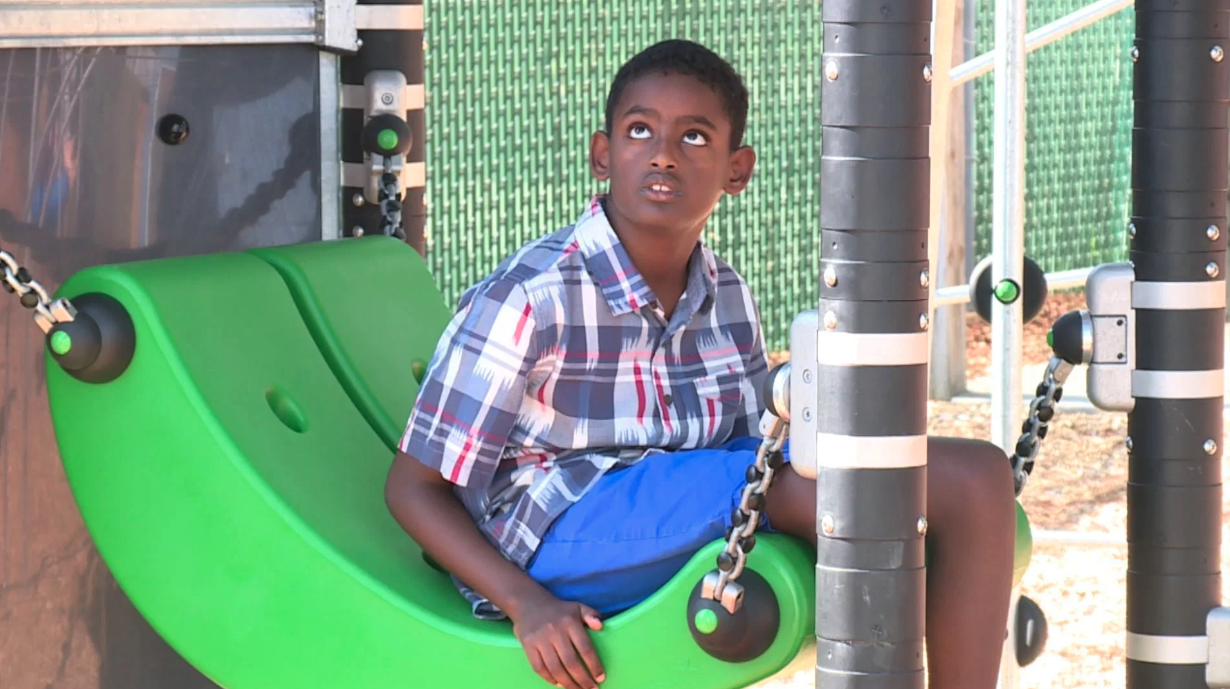
Lower School students play on adaptive playground equipment.
Social emotional learning happens both during lessons as well as outside of the classroom during unstructured time.

The Classroom Without Walls

SEL isn’t a subject you study for forty minutes and then "finish." It’s happening everywhere. I’s a living skill set that gets practiced in the messy, real-world moments—like navigating a crowded hallway, resolving a spat on the playground, or just figuring out where to sit at the lunch table.

These skills are usually "caught, not just taught." You can’t just lecture someone on how to be calm; they have to see it in action. It’s all about the power of modeling—how teachers and students actually treat each other when things get stressful or when they flat-out disagree. Those high-pressure interactions are where the real learning happens. Students learn more from how a teacher handles a stressful moment than from a poster on the wall.

Ultimately, we’re bridging the gap to reality. The end goal here isn’t just to have a "well-behaved" student who follows the rules in a classroom. The goal is to build a person who can walk into a high-stakes workplace or a complex community and have the tools to navigate it all independently.

High-Tech Regulation

Think of SEL as having a modern toolkit for your brain. It’s not just about "deep breaths" anymore; we’re talking about assistive self-care. Sometimes, the gap between feeling an emotion and actually managing it is too wide to jump alone. That’s where technology steps in—whether it’s a "calm-down" app, a sensory tool, or a digital mood-tracker, these aren’t just gadgets; they’re the bridge that helps a student get back to center.

It really comes down to personalized workflows. Think about how a CEO uses a high-end planner or a project management app to stay on top of their day. Students can do the same thing with SEL strategies to manage their mental energy. It’s about learning how to "budget" your focus so you don't hit a wall by lunchtime.

When we frame these tools as professional assets rather than "crutches," it allows students to practice independence through tech. It levels the playing field, giving students the same edge a professional has to stay focused and composed, no matter what kind of environment they’re stepping into.

The "Big Five" (The SEL Pillars)

If we’re looking at the "Gold Standard" of how this works, it usually boils down to five things:

  1. Self-Awareness: Identifying your own strengths and emotions.
  2. Self-Management: Controlling impulses and staying organized.
  3. Social Awareness: Understanding social cues and practicing empathy.
  4. Relationship Skills: Working in teams and handling conflict.
  5. Responsible Decision-Making: Thinking through the consequences of your actions.
A staff member and a student stand together in front of a flower-themed photo backdrop.
As students approach adulthood, it becomes critical for them to understand how our emotions play into everyday life and build confidence in their own social emotional regulation skills.

A Three-Dimensional Skill Set

It’s a common misconception that Social Emotional Learning is just about "feelings," but it’s actually a three-dimensional skill set designed for total student development. On the cognitive side, it’s the engine behind problem-solving and executive functioning—the "brain power" needed to think critically. Then you have the social dimension, which covers how we communicate, collaborate, and actually contribute to our communities. Finally, the emotional piece ties it all together by building the resilience and stress management skills that lead to genuine self-confidence. Once students start practicing these skill sets, they being to build confidence, one choice at a time.

The Transformation: From Overwhelmed to Empowered

At Northstar, we don’t just teach students how to pass a grade—we teach them how to handle their future. At the end of the day, SEL is about moving a student from feeling like the world is "happening to them" to realizing they are in the driver's seat. It’s about building the resilience to say, "I can handle this." Want to see what this looks like in practice? We’d love to show you around! Swing by a Northstar Open House or schedule a tour to see SEL in action.


A panel of local black professionals answers questions on their black experiences.

Celebrating Black History Month

In celebration of Black History Month, Northstar filled the calendar with experiences designed to highlight, uplift, and celebrate the rich history, achievements, voices, and contributions of black individuals.

We kicked off the month with an all-student assembly explaining the origins of the month. Although only officially signed into law by Congress in 1986, Black History Month has been observed in some way since the early 20th century. This year marks the centennial celebration since its precursor Negro History Week was designated in 1926.

At Northstar, students stretched their creative muscles by fashioning an interactive “walking museum.” Advisory classes worked together to choose a person to highlight in a poster. Among subjects were black activists, politicians, entrepreneurs, scientists, and more from both history and today. In addition, students and staff delved into the rich culture of black art by exploring the contributions of artists of color. From visual arts to music to the written word, the Northstar community highlighted their favorite or most impactful works.

A display celebrating of the work of black artists, including visual artists, musicians, and authors.
Students and staff assembled a display celebrating black artists.

“It’s important we learn about important people in the past, especially people who ended slavery and people like Martin Luther King,” said middle schooler Amyra about the creative project.

Upper School students expanded their knowledge by taking a visit to the Richmond Black History Museum & Cultural Center of Virginia (BHMVA), where they heard about the achievements and trials of black folks across the commonwealth.

Student with a bust of civil rights attorney Oliver Hill.
At BHMVA, students learned about prominent black figures, such as Richmond civil rights attorney Oliver Hill.

Instructional Assistant Jordan Johnson, who planned the celebrations, said, “Black History Month is an opportunity for learning, reflection, celebration, and connection. It’s important to create space for our students to have meaningful conversations.”

During the last week of February, Johnson hosted a panel discussion of black professionals. Among the speakers were local leaders, business owners, and health care professionals. They took questions about their backgrounds in education, the world of work, and their individual experiences as black professionals.

“There’s gonna be obstacles. That’s what life is,” said physiatrist Dr. Timothy Silver while discussing how to tackle challenges of post-secondary education. “How we negotiate them to get to the next level is up to you.”

A panel of local black professionals answers questions on their black experiences.
Left to right: Mario Thornton, Jordan Johnson, Dr. Brit’nee Haskins, Cory Tolliver, Kayen Wilborn, Clinton Johnson, and Dr. Timothy Silver participate in a black professionals panel.

The panelists shared messages of encouragement and positive intentions for the future of Richmond’s black community.

“Uplifting my community and seeing those same people come and support me is one of the things I really, really cherish about us as a people,” said Kayen Wilborn, a local musician.

When asked about what black joy means to her, Veterinarian Brit’nee Haskins simply commented, “Black joy is just the freedom and space to be who you are.”