Thirty Years of Navigating the Future
Meeting the individual needs is a core value for Northstar Academy and Career Center, Central Virginia’s premiere school for students who have learning differences. Valuing individual needs was foundational to the dream of parents and pediatric professionals who envisioned a safe and inclusive learning space three decades ago. It was a guiding light for Northstar as it moved from a one-room classroom into a hodge-podge of train cars and finally to a two-building, 10-acre campus in Glen Allen. And, over the years, the Northstar community consistently held as a priority students’ individual learning needs and provided them forward despite the challenges along the way.
A private school and a nonprofit, Northstar is unique. This is a look at its 30-year journey.

Northstar: The First Decade
Growing up can be hard to do!
Learning how to read, tell time, dress, and make friends are typical childhood milestones along the journey into adulthood. Families tend to approach these milestones in similar ways, and public school systems use standard strategies to progress students from one grade level to the next.
But each person’s experience differs depending on how well they are equipped for the journey and the support they receive. For students who learn differently and face academic, social, and emotional challenges, this journey is anything but typical - and often difficult.
“It’s not traditional and is often traumatic,” said Northstar’s Founder, Candace David, in an interview from Naples, Florida. “The schools don’t know what to do with these children. Often they’re trying to fit a square peg into a round hole.’’
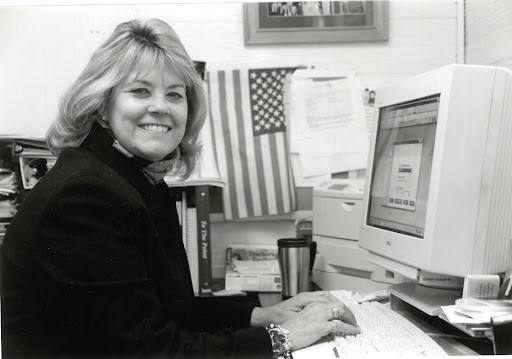
Standard teaching for the masses was common practice in the 1990s, explained David, when worked with families providing diagnostic, counseling, and placement services. Frequently, parents described similar issues with a one-size-fit-all approach. She also experienced difficulty placing students. One day, David recalled, she threw her hands in the air and told a parent, “I don’t know what else I, or we, can do but start a new school.”
Not long afterwards, pediatric urologist Dennis Garvin held a meeting with David and several parents in a West End living room. “We talked and talked about the need for a place for children who learn differently, and shared stories of how children were segregated and often left out of social activities.” The conversation led to a vision for an inclusive learning and social environment. David spent 1995 looking for space in churches and traveling as far as Massachusetts and Arizona to visit innovative schools. Out of this determined and innovative spirit came Northstar Academy, one of the first schools of its kind in the Greater Richmond area.
Vision to Reality
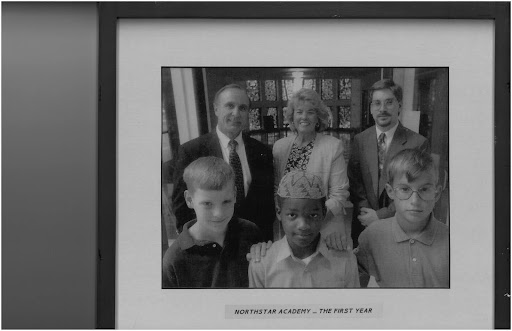
Northstar Academy opened at Epiphany Lutheran Church at Monument and Horsepen roads on September 19, 1996, with David serving as its first Head of School and Garvin as chair of the first Board of Directors. David worked from a janitor’s closet filled with mops and cleaning products, while 13 children sat nearby in a Sunday school classroom. Her daughter, Whitney Sears was a teacher and provided instruction. A $6,000 annual tuition was “enough to pay for a teacher and teaching resources,” she added.
With 28 students the next year, Northstar moved into Congregation Or Atid on Parham Road. Northstar quickly outgrew this shared space too and found it needed more classrooms, teachers, and resources. Parent Rick Witty, a local businessman and currently part-owner of Peter Blair, Ltd., took David to see Victoria Station. The former steak restaurant-turned-daycare center on Shrader Road was vacant and “the price was right,” David said. But she broke down on the depot steps and told Witty, “it’s too small. We need a gym, a science lab and more classrooms.”
Chuck Sweeney, a successful Richmond entrepreneur, came through to help fund the purchase of the Shrader Road property. A former baseball player in the New York Yankees system, he owned Richmond-area Shoney Big Boy and Captain D’s Seafood restaurants. “It was a start,” said David, who knew she’d the sweat equity of every family before she could open for the school year.
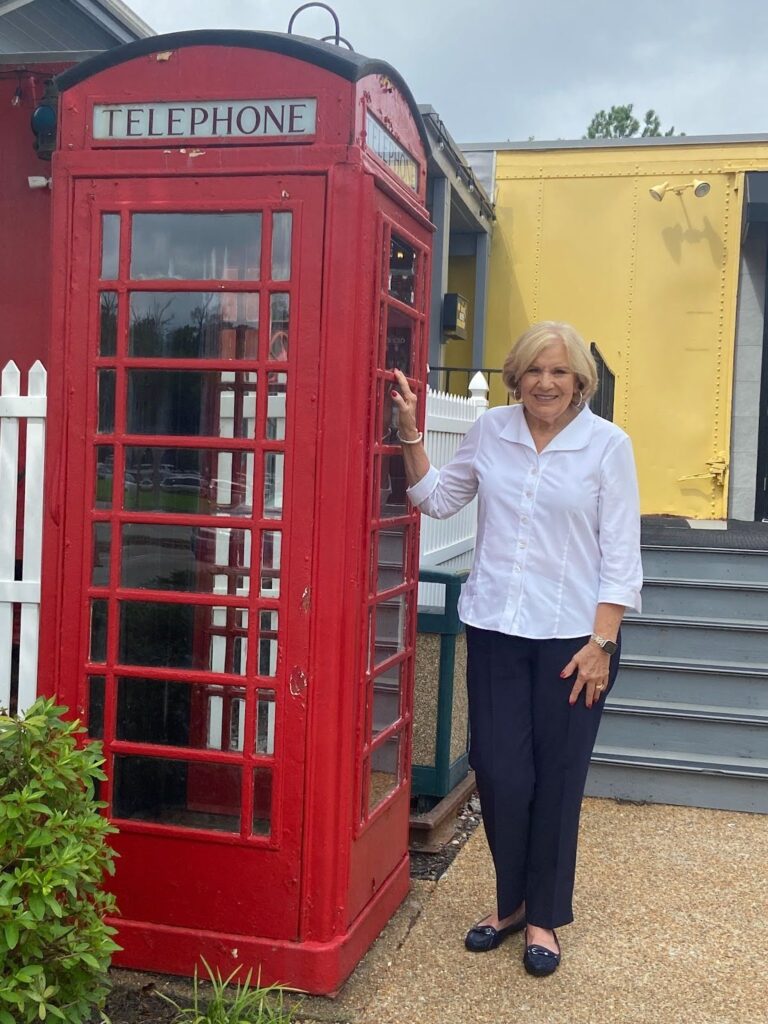
Donna Bower, a former parent and board member during those early years, remembered David’s message to families who gathered for a dessert event. “The expectation was you will do as much as you can for the school,” recalled Donna during a chat at Brick Road Coffee Co., now located in the former school. “I remember hearing it loud and clear.”
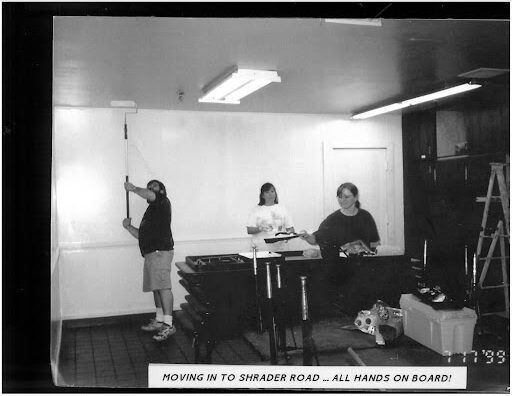
Armed with supplies and hope, parents cleaned and painted the interior black walls with softer colors and remodeled a kitchen “that really needed a lot of work,” laughed Bower. The local community donated furniture, lockers, a large receptionist-style work station and old computers later refurbished by a seventh grader.
“We had to roll up our sleeves and do everything we could,” said Bower, who received Northstar’s 2025 Navigator Award for Enduring Support. “We had to have a school for our kids and for the kids to come.”
Fundraising Begins
The train depot’s purchase was the first stop in the founder’s vision mapping for more classrooms, an indoor multi-purpose facility, and a science-technology lab. Northstar’s community began fundraising soon after move-in. Bower and former parent Beth Daly led the effort and were supported by a newcomer Meg Medina. “I worked her really hard,” Bower said of Medina, Northstar’s first grant writer/development director. “She had so many talents and I put them to work.”
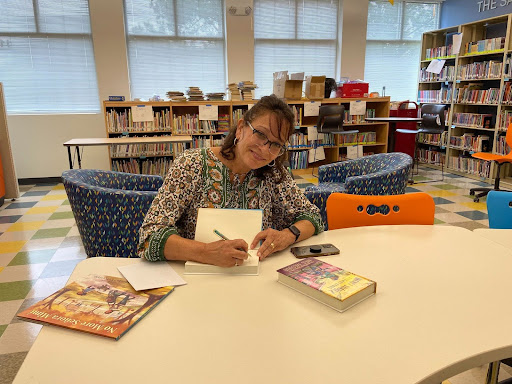
Asking for financial help was “a lot of work,” said Medina, who didn’t have a lot of development experience and was quietly writing her first novel. But she “did it” because the school’s needs were “acute.” “I was really early in the game; there was no funding,” said Medina.
But Northstar had a different sort of riches.
“Even in the early days, the school had some really wonderful people on staff. True gems. People who loved and respected children deeply,” said Medina, the author of 14 books for children and young adults that celebrate Latino Culture, and a John Newbery Medal winner. She served as the 2023-2024 National Ambassador for Young People’s Literature.
Over the next few years, a fundraising mindset took root at Northstar and its vision materialized. A “Raise the Roof” campaign led to the building of a 5,000-square-foot multi-purpose room and gymnasium or “gymacafetorium” as students called it. Galas and annual giving campaigns followed. A “Building Blocks” campaign raised $425,000 to build a 3,450-square-foot upper school building with six classrooms and a technology lab funded by Verizon Wireless. Volunteers built a ramp from the school to the “gymacafetorium,” creating a better connected community for students to learn, play, and discover their talents.
It’s Working!
Northstar made good on its promise to provide students with opportunities to learn, discover their talents and participate in typical childhood activities. “The students had the same things that public school students had, which was really important, ” said Nancy Creecy, former parent and Northstar teacher.
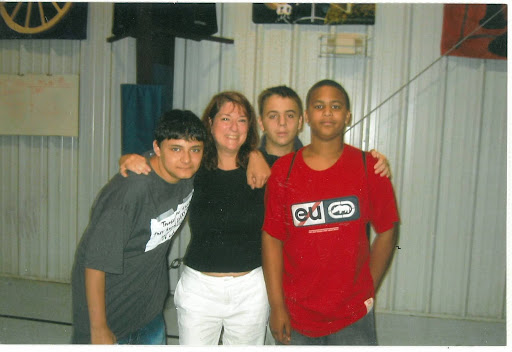
Parents, teachers, and staff joined forces to ensure students got the extras too. They held dances, proms and Homecoming celebrations, and chaperoned basketball, soccer, and cheerleading activities. Students learned music, sign language, and Italian. They even participated in the school newspaper and yearbook. “The students learned a lot,” Creecy said. “They had a lot of fun.”
Before long, Northstar graduated its first seven students including Creecy’s son Austin, and Forrest Austin, Ryan Bailey, Caryn Bare, Eva Carlisle, Tim Crowl and Brian Vial. The first graduation in June 2002 is David’s most cherished memory. “I was so proud of those kids because they actually made such academic progress,” she said. “It felt really good seeing the delight on those parents' faces when they saw their kids being included in regular childhood activities and making memories. I was seeing their joy that ‘it's working, it's working.’”
As 2006 approached and Northstar completed its first decade in operation, the school graduated seven more students. The leadership also changed as John G. Myers, Jr., succeeded Gavin as board chairman and Patricia “Pat” West became the new Head of School.
Northstar: The Second Decade
Uniquely Northstar
Northstar grew significantly and upped its game on many fronts under West’s tenure from 2004-2017.
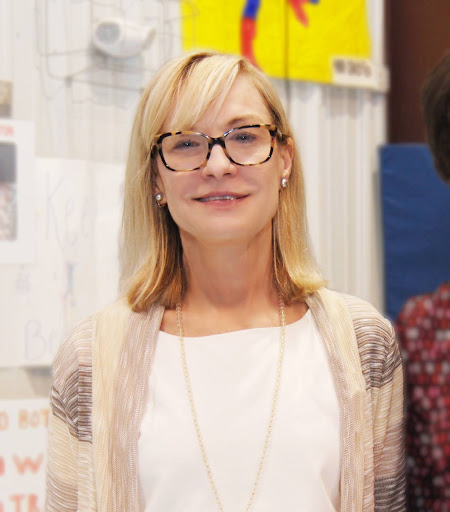
When West joined Northstar she already had 26 years experience in the Henrico County Public School System and a master’s degree in special education from the University of Virginia. With her signature “can-do attitude” and a commitment to excellence, she set about transforming the school’s operations, curriculum and professional stature.
“Dr. West tried to get the best out of everyone,” said Admissions Director Miranda Gerhard, who was a teacher under West’s leadership. “The example she set was a constant reminder that we are all here for the students.”
The school added kindergarten, launched after-school programs, and established a Transition Program to help upper school students prepare for life beyond Northstar. Fundraising efforts include two golf tournaments. The first, held at the Crossings Golf Club, raised over $18,000 for student scholarships, and the second raised another $25,000.
Northstar used a mix of curriculums to enable students to learn at their own pace. But there was a growing awareness that students needed strategies for managing social and emotional challenges that came with their disabilities, explained Catie Huennekens, Assistant Director of Northstar Career Center. “Social-emotional learning provides important life skills to resolve conflicts, engage in conversations, and cope with big feelings,” said Huennekens, who joined Northstar as a teacher in 2005.
West reached out to Peter D. Patrick, a renowned neuropsychologist at the University of Virginia’s Kluge Children’s Rehabilitation Center, and partnered in creating the school’s signature social skills program. “The focus on social-emotional learning was 一 and remains 一 a priority and daily focus within the Academy and the Career Center,” said Huennekens, who collaborated with colleagues to bring the project to life.
Around the same time, The Community Foundation provided a grant to create a transition program for high school juniors and seniors called Countdown to Employment (CTE). The program developed students’ skills to search, apply and interview for jobs, and acquire practical experience through partnerships with local businesses. Although Northstar’s career preparation has grown tremendously, the tenets of this program are still used to prepare students for employment and independent living.
Restructuring and Updating
A financial crisis in 2010 and wrecked the national and local economy significantly impacted Northstar’s operations. The student body temporarily dipped below 80 students, and many who remained needed tuition assistance to attend. In an attempt to reduce overhead, the school let go of teaching assistants. Leaders went back to the drawing board to problem solve and develop a new plan.
The strategic planning process identified reading and math as areas that needed new approaches. Innovative and new at the time, the Lindamood-Bell Learning Process™ integrated sight-word recognition, contextual fluency, oral vocabulary and comprehension. Russell Parker, III, board chairman from 2011-2013, went to California to learn firsthand how the process worked. Teachers were trained when a local opportunity presented itself. As a result, a custom program that met the school student’s needs became permanent in the 2012-2013 school year.
“When I started, there was definitely this feeling of rebuilding and restructuring,” said Wanda Ramsey, Assistant Head of School, who joined Northstar as a high school math teacher in 2010.
The overall upgrading continued as Northstar added Promethean boards, Kindles, and iPads 一 making assistive technology available to students, and leaders began requiring special education licensing for all teachers. The changes helped Northstar earn an accreditation from the Virginia Association of Independent Schools (VAIS).
In order to remain in a student-first mode, the Northstar community consistently asked itself, “what do we need to do so that our students 一 all of our students 一 leave us with options,” West explained in a 2014 interview. “We give parents hope.”
David Rosko, a teacher and the parent of two children on the autism spectrum, found that hope at Northstar. His daughter had seemed “lost” and “isolated” at school. He first home-schooled her, then enrolled her in Northstar in 2013. That’s when the family's world changed, he said.
“Parents were supposed to put in a certain amount of volunteer hours at the school helping with fundraisers, landscaping, and other things. I tutored students in math,” Rosko said. When a position teaching math opened up he immediately took it. “I love it here,” said Rosko. “I absolutely love it here.”
The support for Northstar’s students doesn’t stop when they become young adults.
In 2014, Northstar opened a full-scale vocational training center for students aged 16–24. The Career Academy now called Career Center, was initially housed separately on Staples Mill Road. It provided training in Hospitality, Materials Handling, Construction & Maintenance and Business Technology. A year later, Northstar included a Veterinary Assisting. With a new grant Northstar purchased two vehicles to transport the students into the community, and it soon became a Virginia Department for Aging and Rehabilitative Services (DARS) vendor.
Today, instructors continue to build new pathways to employment by empowering students to gain industry experience, and achieve professional credentialing to improve employability and increase productivity. Instructors also focus on life skills in areas such as work-flow management and independent living, plus opportunities to earn nationally recognized industry credentials for specific jobs.
“It’s always a transition for students moving from high school to the workplace, or even advancing from the Academy to the Career Center for training,” said Cynthia Izac, who instructs students in Business Technology and Materials Handling. Learning to set goals, track work progress, and use executive functioning skills is important to becoming a productive citizen,” said Izac, who formerly taught academics at Northstar. “The goal is to be employed, but my hope is that they have an opportunity to have a fulfilling life in a job, volunteering, and in their chosen social activities,” Izac added.
By 2015, Northstar’s light was shining bright. “Word has gotten out about how wonderful Northstar is,” said Rosko, who takes every opportunity in the community to sing its praises.
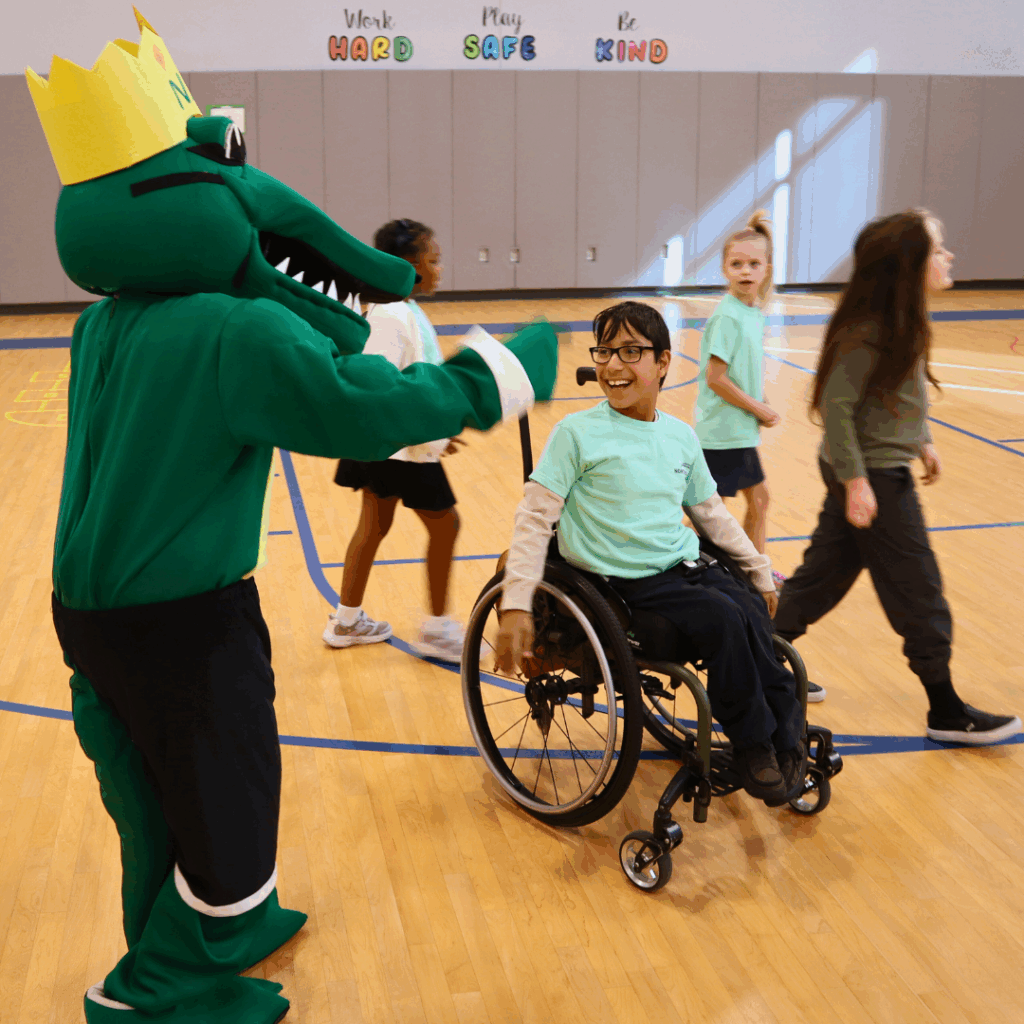
The community embraced a whimsical and youthful identity with a mascot “Navi the Navi-Gator.” The alligator remains the school’s beloved mascot and a character that connects its past and present. “Navi epitomizes the spirit of our Northstar community,” said a fellow staff member. “We are serious in our commitment to help students be the best they can be, and we approach this work with a creative and spirited mindset.”
Northstar’s operating expenses reached $2.6 million during the 2015-2016 school year. Along with its annual fund campaigns, galas, and mix of fundraising tactics, it turned to a state tax credit program to help increase enrollment and scholarships for qualifying students. Virginia’s Neighborhood Assistance Program Credits (NAP) gave individuals and businesses who donated to nonprofits like Northstar tax credits that reduced income tax liability. The incentive helped Northstar raise the additional funds needed.
By the time Northstar celebrated its 20-year anniversary in 2016, it also had acquired accreditation from the Virginia Association of Independent Specialized Education Facilities (VAISEF), and was named a “School of Excellence” by the National Association of Special Education Teachers (NASET). The school has earned the designation each year for the past decade.
Northstar Academy: The Third Decade
Big, Bold Aspirations
Crystal Trent became Head of School when West retired in 2017 and brought her own set of high standards and expectations for students, families and the community.
In 2019, Northstar sought a feasibility study for a capital campaign that would eventually enable Northstar to acquire a permanent location with room to grow. But first, they had to weather a global pandemic in 2020 and 2021.
But Northstar did one of the things it does best 一 it innovated, remained focused on the student-first approach and provided students with continuity in an uncertain world. Staff adopted quickly and instituted remote 一 and later 一 asynchronous learning. When the initial threat had passed and school started to normalize somewhat, Northstar kicked off a major capital campaign and purchased a 21,000-square-foot school on Nuckols Road vacated by Strayer University.
While renovating and raising $13.5 million for a second building, students, faculty and staff moved into the spacious $4.5 million facility. A transformational move, Northstar was able to consolidate the Academy and Career Center under one roof. In 2024, Northstar broke ground on a gymnasium and community center next to the classroom building. Within months, students and staff signed several steel beams before they were lifted into place.
Beyond the physical manifestations of a safe, strong, and successful environment, students feel their community’s support in everyday activities. When a peer asked fellow middle school student what success looks like at Northsar, he responded: “The teachers help me and everyone is accepted,” then added, “we have people in walkers, crutches, and wheelchairs.”
School counselor Kristin Hughes sees the success at every turn. She credits Northstar’s supportive community. “I love the fact that Northstar really works with students in meeting their needs academically, emotionally, and socially.”
In April 2025, the school held a ribbon-cutting for the 16,000-square-foot gym, a symbol of both stability and possibility. Trent addressed the almost 300 people who gathered in the new gymnasium.

“It is not lost on me just how far we’ve come since our founding in 1996. Northstar has always been guided by one central mission 一 to promote educational excellence and career opportunities for students with disabilities who have academic, physical, or social challenges. This gymnasium is not just a new building. It’s a powerful symbol of what we believe our students deserve 一 spaces that inspire, include, and empower.” Trent told students, families, donors, and community members.
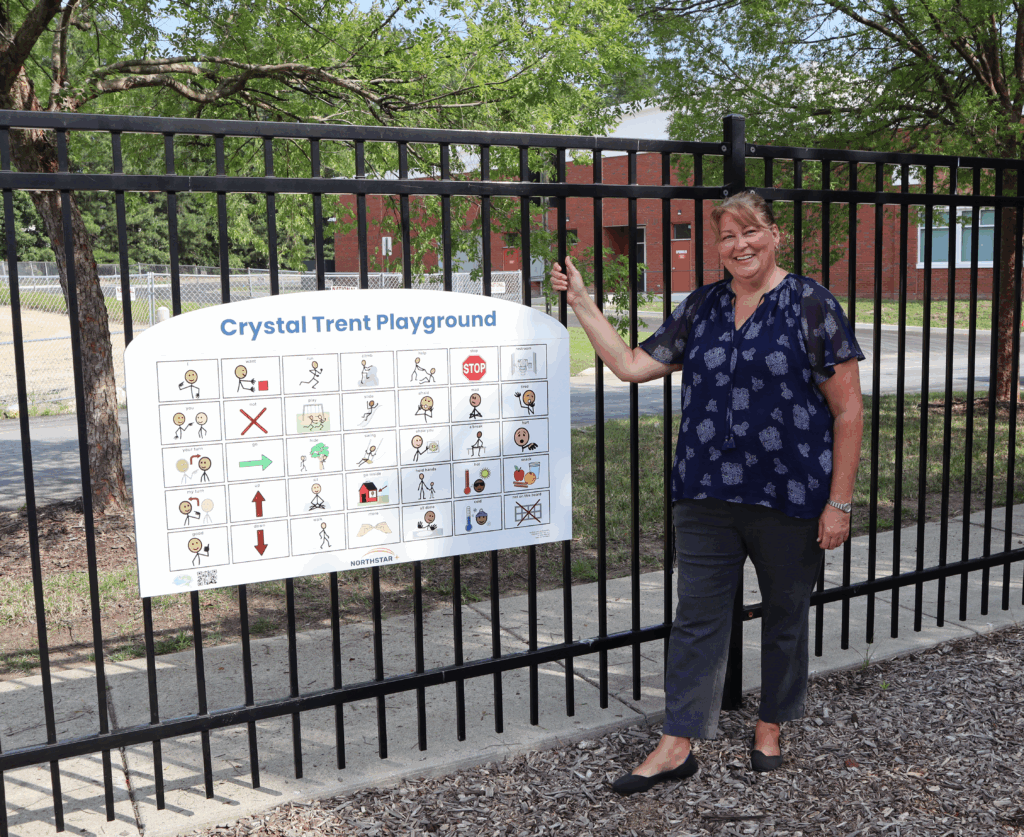
A few months later, when Trent left Northstar after an eight year tenure, the school named its playground “The Crystal Trent Playground” in her honor. Several celebratory events recognized her for her strong leadership through the global pandemic, a transformational move from Shrader Road to Nuckols Road, and a major capital campaign.
When asked what attributed to her success she credited colleagues and a supportive community. “I work with an incredible group of individuals who support each other and help take care of each other so that our students are served in the best way possible,” said Trent.
New Leader. New Possibilities.
As it celebrates its 30th Anniversary this year, Northstar already has started a new era that is full of possibilities.
In July 2025, Bethany Raffanello became Northstar’s latest and fourth Head of School. With a plethora of credentials including an MBA from Quinnipiac University, a master’s degree in education from Simmons College, and was a Board Certified Behavior Analyst.
Raffanello also amassed 20 years of experience with The New England Center for Children (NECC) where she worked her way from a classroom teacher to Director of Student Administration. Her portfolio made Raffanello a “clear choice to lead Northstar into its next chapter,” according to a joint statement by directors. They cited her “professional expertise, warm and engaging personality, and alignment with Northstar’s mission,” with making an impression.
The school made an impression on her too.
“I’ve been inspired by the passion and commitment I’ve seen across the Northstar community, and I am eager to listen, learn, and work alongside you as we build on the school’s strong foundation and move forward together,” Raffanello said not long after joining the team.
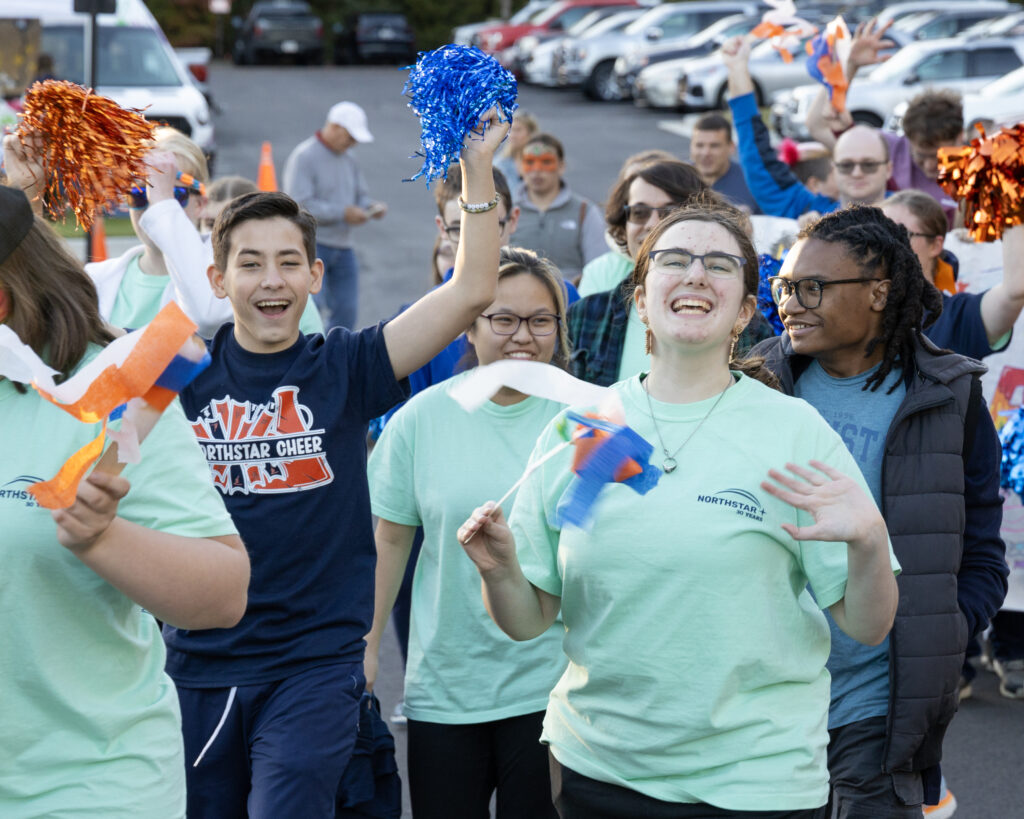
Raffanello has a clean slate in designing a future for Northstar 一 well-educated faculty members, professional staff, and a school with such a stellar reputation that families are moving to Virginia to place their children there.
The school also has an expanded, inviting campus, said Ramsey, who has been pivotal in helping Raffanello assimilate over the past four months. “It opens the door to a lot more community connections,” Ramsey said. “It will be exciting to live in this space and see what it does.”
Richard Bennett, Board Chair from 2023-2025, also sees endless opportunities to engage the community, build new relationships, and renew old ones including the school’s alumni.
“What a unique resource it truly is for the Richmond area,” Bennett told 250 plus attendees who attended the 2025 Illumination Gala last March. “Northstar opens its doors to families who are looking for a different educational home for their student 一 a place where they are accepted and celebrated for all they can do!”
One former student put it this way: “Northstar is just the best place in the world.”
Flying High
When’s the last time you rode in an airplane? How about the last time you sat in the pilot’s seat?
Recently, Ms. Kiki’s Geography class took a field trip to the Richmond International Airport, where they got to get up close and personal with aircraft and the processes that make it possible for us to fly.

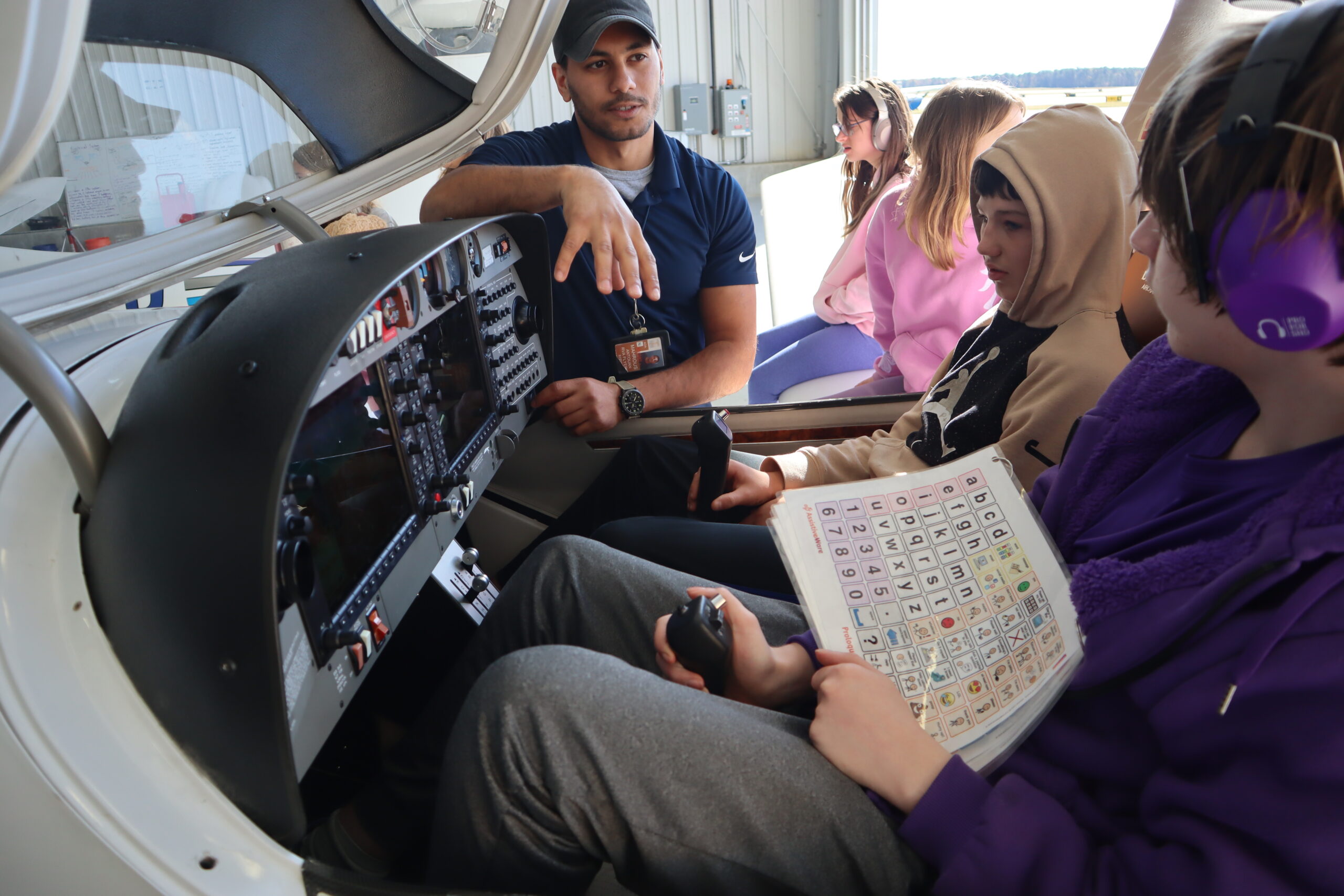
The first stop of the field trip was RVA Flyers, a flight training center where new pilots learn the skills to earn their private or commercial license. Tony, a flight instructor who led the tour of a small hanger, assisted students in climbing into a small four-seater plane, where they learned about the many controls and buttons.
“We use these planes to teach new pilots,” explained Tony. “You need to be at 17 years old and log at least 40 hours in the air to earn your private license.”

“In the plane you could move the joystick and press the pedals and the tail would go back and forth,” said eighth grade student Laureli.
After touring RVA Flyers, students got a private tour of the air traffic control tower.
From the 6-story tower, they got a birds-eye view of the entire airport complex. Workers pointed out a side of the airport not typically shared with passengers, such as the fleet of deicing vehicles and ongoing capital improvements to RIC’s airfield.

“I really liked seeing the monitors,” said Hunter, eighth grade, about the experience. “We saw a cargo plane and a big jet landing, too.”
Between answering student questions, they shared their day-to-day tasks. As one controller shared, “The busiest times are when the weather is clear in Richmond but bad in surrounding cities, because all those planes get redirected to us!”
While watching planes take off and land, students learned the basics of how to read radar equipment and dabbled in speaking with the ICAO phonetic alphabet (Alfa, Bravo, Charlie, Delta, etc).
Northstar students love going off campus and exploring learning opportunities beyond the classroom!
Students Lead the Way in Recycling
At Northstar, learning doesn’t just happen in the classroom — it happens in the hallways, the lunchroom, and even by the recycling bins. Thanks to a student-led recycling initiative, our middle school students are taking the lead in reducing waste across campus while gaining valuable vocational and life skills.
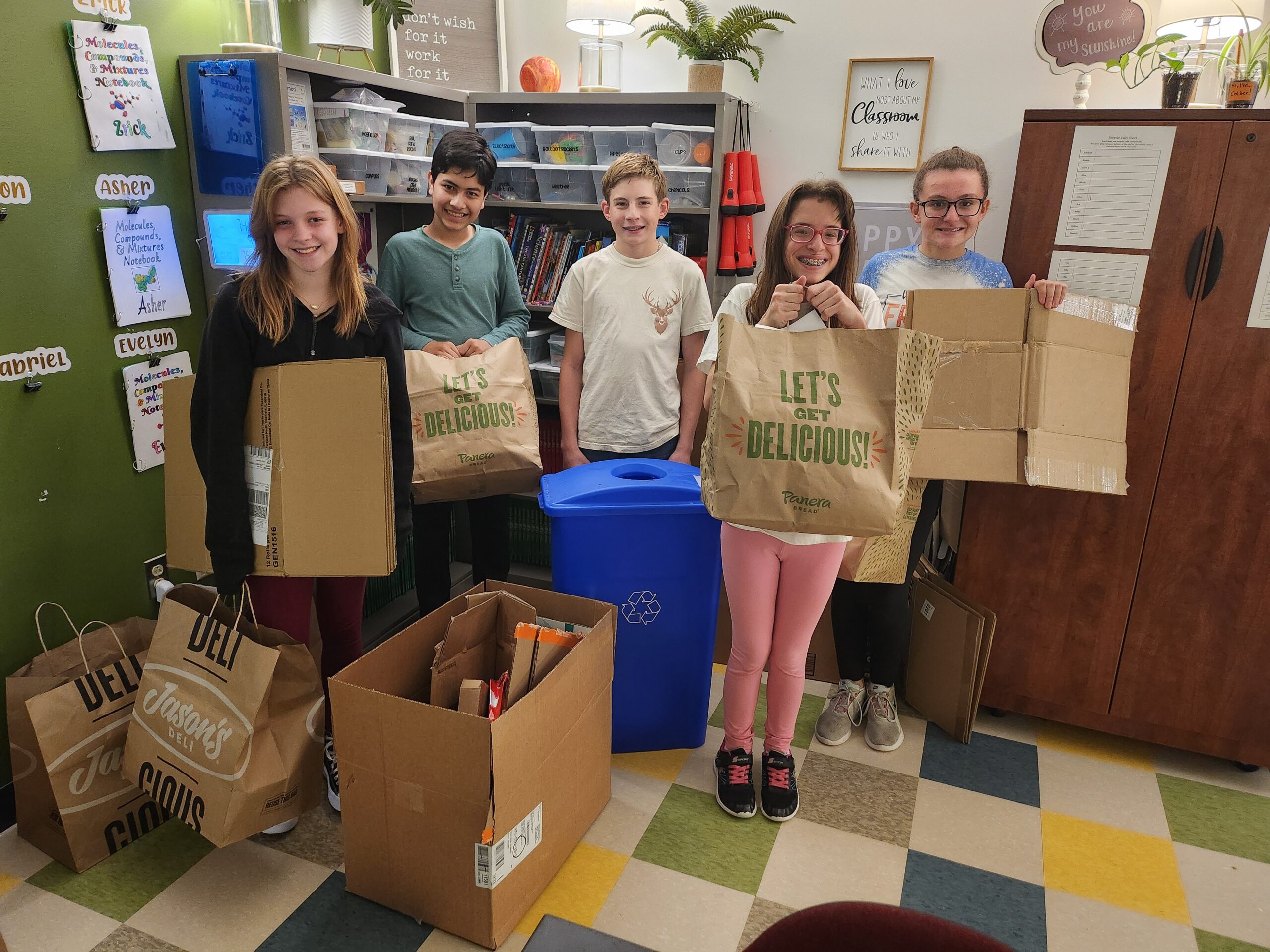
Led by middle school science teacher Isabel Futterman, the program has become part of both the curriculum and the culture at Northstar. Each week, students collect recyclable items — plastic bottles, paper, and cardboard — from classrooms and common spaces. They sort, organize, and prepare the materials for transport to local recycling centers, turning what could have been waste into a lesson in responsibility and environmental stewardship.
Recently, the program received a boost through a Green Grant application. This helped purchase new recycling bins, including a triple-sort station for the new gym and community room. These additions make recycling even more accessible for students and staff. The multiple locations remind us that sustainability is everyone’s responsibility.

“Hooray!” Ms. Futterman commented about the update, “Students now have sorting bins across campus for cans, bottles, and paper products. It’s a small step that makes a big difference — and it’s led by them.”
The impact is already visible. From the office to the library to the lunch room, new blue and grey bins are in place, giving students a hands-on role in keeping our school green.
The program also gives students the opportunity to hone their social skills. When visiting offices and classrooms to collect bins, they practice proper entry etiquette. This includes knocking politely, waiting for the okay to enter, and asking if they can step in to take care of this week’s recycling.
For our students, this initiative goes beyond recycling. It’s about building executive function skills like organization, planning, and teamwork. It’s about practicing leadership and community service. And it’s about recognizing that even small actions (like choosing the right bin) can add up to meaningful change.
At Northstar, we are proud of the way our students are learning to care for the world around them, and we look forward to seeing this program grow. After all, sustainability is not just a lesson for today — it’s a skill for life.
Math: A Lesson in Timing
Timing is everything - whether you are running a race, buying the last shirt in your specific size, or meeting your life partner. It’s also true when it comes to learning math.
The pace at which educators teach students with disabilities can be a critical factor in how well they process information and make connections to “get the right answer,” says David Rosko, who teaches high school Calculus and Algebra at Northstar Academy & Career Center.
Rosko watched this play out over and over while teaching in Chicago and Virginia public schools, where math is taught at a brisk pace.
“When I first came here to Northstar, my pace of teaching math was a shock for the students, so I had to scale it back a little,” Rosko explains. “We’re still doing all the content required by Virginia’s SOLs, but the pace is slower."

Math Curriculum + Family Input + Problem Solving = Success
Northstar’s curriculum meets Virginia’s Standards of Learning (SOLs). That’s a starting point, according to Rosko. Setting expectations and scaling them to support individual levels and goals involves good communication with students and families. It's something he believes Northstar does well.
“There is a flexibility for different teaching styles and a community of support that is different here,” he notes. “This is also a place where a teacher with a softer touch is a great fit for students.“
Northstar students also have an important advantage with small class sizes. While public school system classes commonly reach upwards of 20 - 30 students in a class, the student:teacher ratio for special education classes is capped at 8:1.
“That’s when you see the students and their families struggle,” says Rosko, who knows the pattern well, not just as an educator, but as a father who raised two children on the autism spectrum.
“We know having a child with a disability is difficult. It’s stressful on the whole family,” he says. “At Northstar, we want you to feel supported and comfortable.”

Experience and Agility Guide Hands-On Teaching
Middle-school teacher Edna Heinig has taught math for 26 years 一 15 years at Northstar. Her experience and flexible teaching methods enable her to change course rapidly. She recalls years in which each student in her class was operating at a different instructional level.
“I have the flexibility to teach differently, to provide a 1:1 approach when it comes to teaching strategies and pace," says Heinig. For instance, she explains, what might take two weeks to teach in a standard public school class may take four weeks to teach at Northstar. “We can work at their pace. Whatever is in the best interest of the child is most important.”
Heinig’s overall teaching philosophy and goal is to use math as a way to teach students how to pay attention to the details, follow instructions, and learn social skills through collaborating. “Math can help students learn to get along with others and help them acquire skills to survive in the world outside of Northstar,” she says.

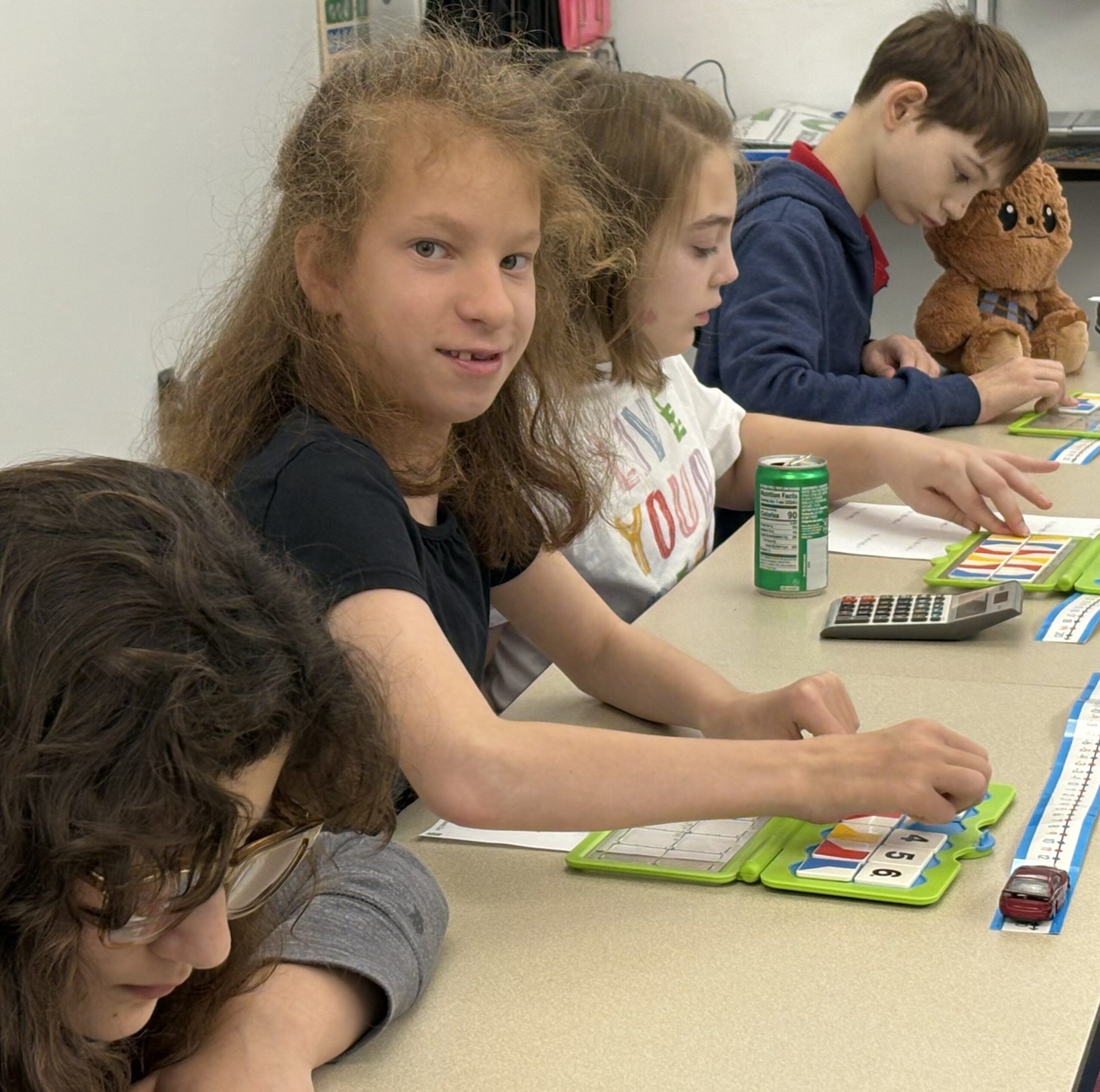
One of Heinig’s favorite teaching methods which she finds “very effective” for middle school learners is the use of manipulatives. These tools integrate the thought process and the creative use of physical objects to solve math problems. This includes hands-on work with connecting objects similar to Lego blocks, tape measures with negative numbers for counting and applying the right answers to math problems to create new designs.
“The students are learning,” she says while demonstrating the use of manipulatives. “I use it every day and the students love it.”
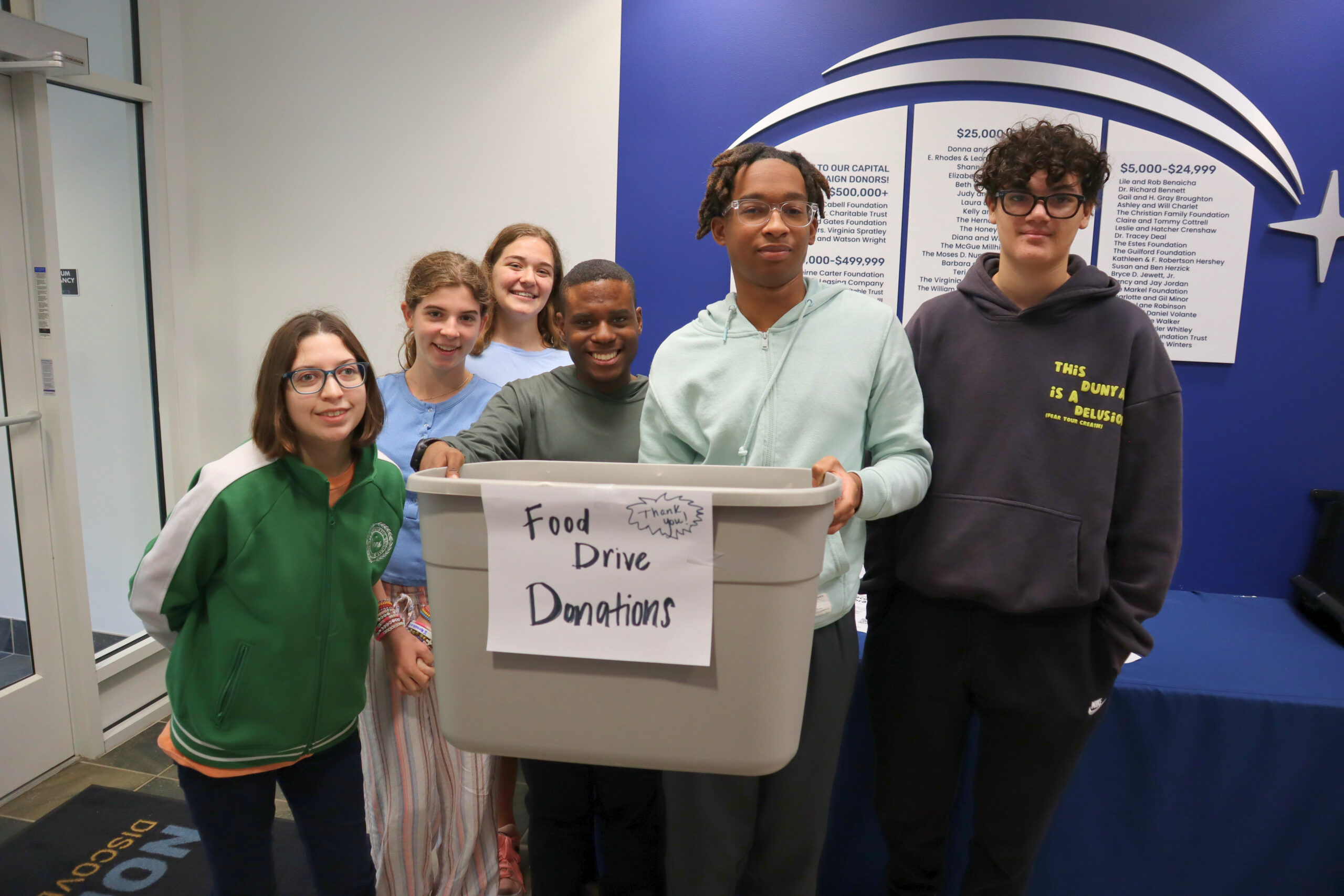
Student-Led Service Project Takes a Bite Out of Hunger
When tasked with coming up with ways to be involved in the community, the group of upper schoolers decided as a class that they wanted to make a positive change in the form of a food drive.
Advisory is part of Northstar’s proprietary program focused on refining social skills such as personal responsibility, effective communication, coping skills, and self-advocacy. Each month has a different theme. Ms. Lynch’s Advisory class is embracing the monthly theme of “community” with a special service project.

Students discussed a number of ideas such as a hygiene campaign, clothing/coat drive, or even a dog toy collection for a local shelter. Ultimately, the class landed on a food drive.
“This kind of drive is more accessible,” says 9th grader Emerson about the winning idea. While not everyone could have means to donate a coat, donating an extra can of food is relatively inexpensive in comparison. Plus, food drives are a common, recognizable charitable project and are simpler to organize and advertise. The initiative aims to provide relief to families facing food insecurity in Richmond.
“We talked about what it means to be food insecure,” says English teacher Ms. Lynch, who is leading the initiative. “We can empathize with less fortunate people in our community and help them in a tangible way.” The USDA defines food insecurity as an economic and social condition of limited or uncertain access to adequate food.
"It feels good to help people who need it in our community," says 10th grade student Barrington.

When the collection period is over, all donations will be given to Feed More, a local food bank. Feed More distributes prepackaged and cooked meals to people facing food insecurity across 34 Central Virginia districts. Nonperishables, such as canned foods, dry goods, condiments, and spices, are welcome donations. The organization asks for any snack-like donations to be nutritious.
“The food has to be healthy,” says 9th grade student Evelyn, “So no candy, please.”
Donations will be collected through October 7th.
Scouts on the Scene

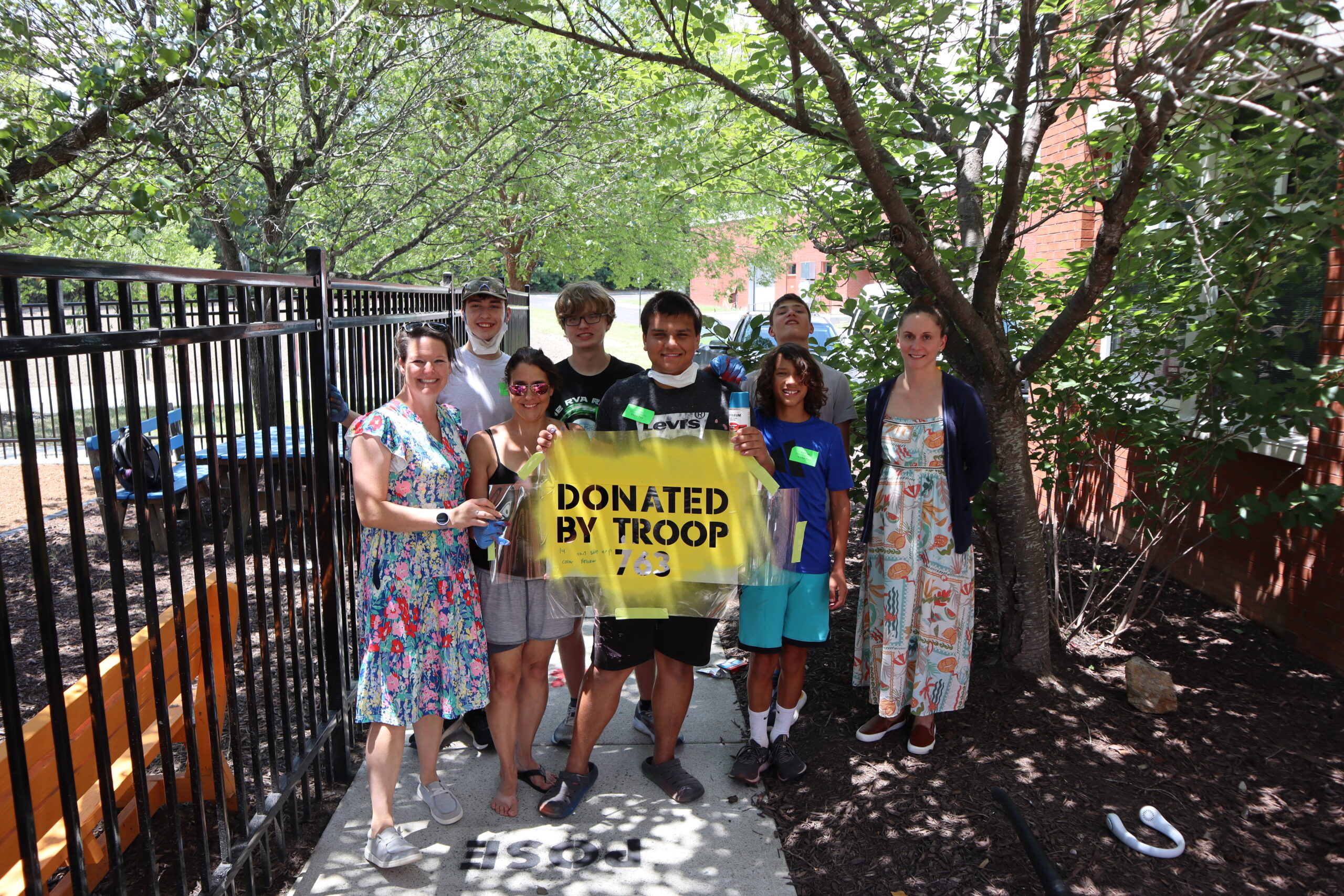
A huge shout-out to Max from Boy Scout Troop 763! For his Eagle Scout project, Max has given Northstar something truly special that our students will enjoy every day.
At 17 years old, he wanted his project to make a real difference. “My brother went here, and around that time I started thinking about Scout projects,” he explained. Max, who enjoys woodcraft and working with his hands, commented, “After talking through some options with the Head of School, we decided to do a sensory walk.”
With stencils he and his crew of volunteers designed and printed, Max turned an ordinary stretch of sidewalk near our playground into a colorful sensory walk. The first step was power washing the nearly 300 feet of concrete to clear it of any debris and prep the surface, then lay the stencils and spray paint the activities in vibrant colors. Along the path, students are prompted to crab walk, spin, touch their toes, jump, balance, and more. Sensory walks are great ways for students to incorporate movement during the day while taking a break from the classroom. The exercises are fun, but they also help students build coordination, practice motor skills, and even regulate their bodies.

Max shared that his favorite part is the balance beam section. He also hopes the project has a long life here at Northstar. “I hope it lasts as long as it can and that kids like to use it,” he said.
The Eagle Scout project is a significant milestone — it represents not only years of Scouting but also the ability to plan, lead, and complete a meaningful service project that benefits the community. Max’s work is an example of how young people can leave a lasting mark while learning leadership, responsibility, and teamwork.
Already, students are eager to try out each new challenge, and teachers have noticed how much joy it brings to recess, P.E., and even quick brain breaks. What was once just a sidewalk is now an interactive space where movement and learning come together.

A Peek Inside Business Technology
In the 21st century, technology is no longer just a tool. It is a fundamental skill area for personal and professional success. For students with diverse learning needs, mastering business technology can be a transformative experience. They unlock opportunities for independence, employment, and personal growth. At Northstar Career Center, we believe in the power of individualized instruction to meet every student where they are.

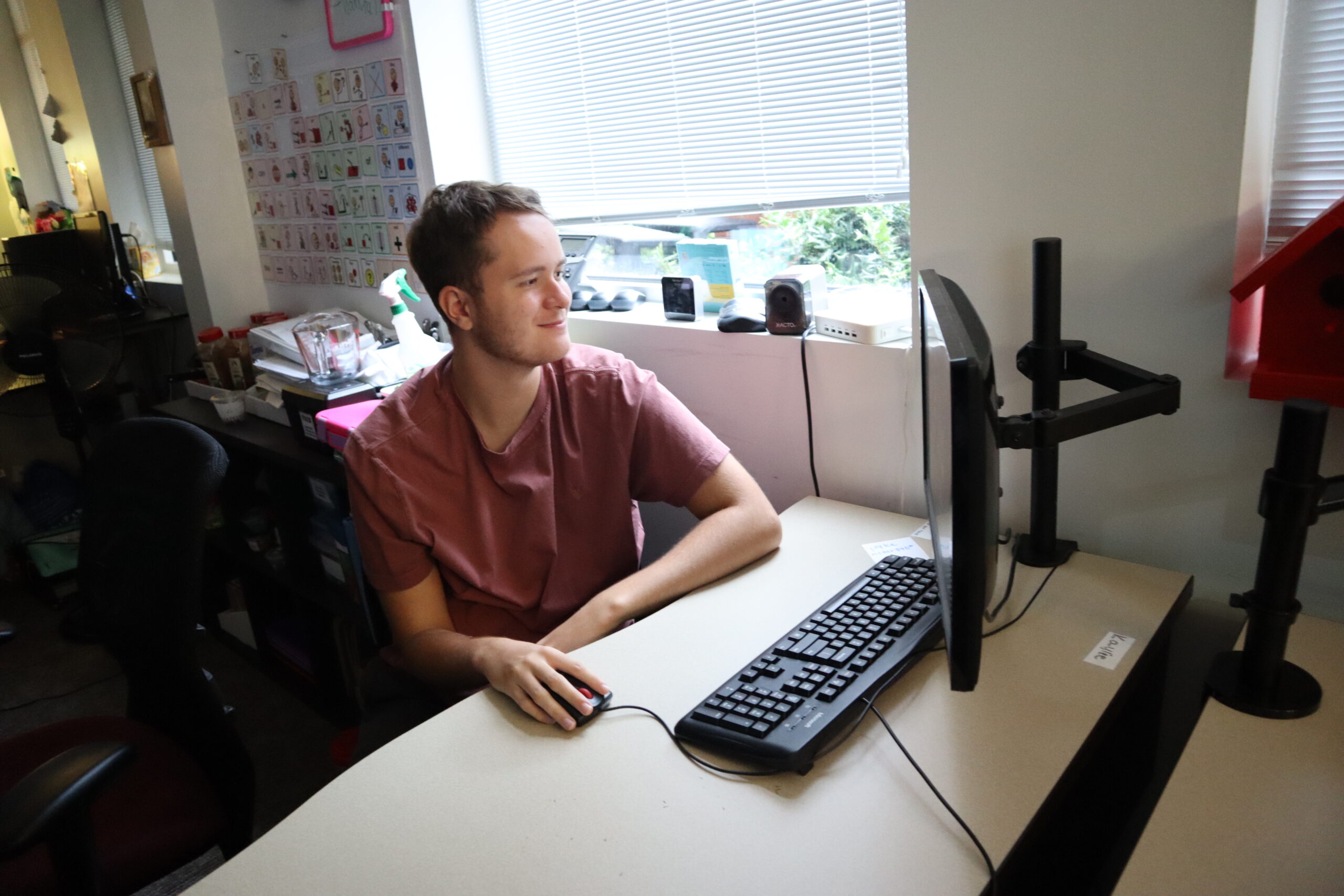
When you step inside the Business Technology classroom, you may notice some things are a little different than a traditional classroom.
Northstar leverages assistive technology to create access for all learners. For instance, a student whose physical disability prevents them from typing with a standard keyboard may instead use voice-to-text software or an adaptive keyboard.
We offer choice in how students show their knowledge. For example, a student might pre-record an oral report using an AAC (Augmentative and Alternative Communication) device instead of presenting live. This allows them to demonstrate their understanding in a format that plays to their strengths.
Each student works towards their own unique goals. We know that no two students learn the same way or at the same rate. In the Business Technology program, a student’s goals will differ depending on their unique strengths or challenges. For example, one student may be working towards the objective to send and receive professional emails independently. Meanwhile, their peer sitting beside them may be working towards the goal of demonstrating understanding of all the hardware components of a computer.
This practice of individualized instruction allows for flexibility in the classroom. It involves a responsive cycle of teaching and assessment. We are constantly monitoring each student’s progress to ensure they are meeting their goals and building skills.
The Lesson Matches the Learning
Northstar’s program relies on the principle of scaffolding. Teachers start building a foundation of basic skills, then gradually introduce more complex concepts. In a lesson about encryption, we are able to see these methods in action.
First, students learn about how spies use codes to send encrypted messages. Each student builds their own cipher wheel, complete with letters, numbers, and symbols. Then they write encoded messages made with their own unique cipher and were tasked with unscrambling each other’s notes.
“A lot of computer tech is abstract,” says Business Technology teacher Cynthia Izac on the lesson, “so I try to make it into something we can see and feel.”

With a grasp on basic encryption, students then learn about its real-world applications in the tech world. End-to-end encryption is a communication security method where data is encrypted between the sender and receiver, making it unreadable to third parties. The U.S. Department of Justice calls encryption "an existential anchor of trust in the digital world" and stresses the importance of its part in protecting digital privacy. Because this kind of intangible concept can be difficult to understand, a hands-on activity can help our brains make a connection.
Scaffolding breaks up curricula into bite-sized segments. This lesson on encryption leads into more complicated concepts, such as the binary numeral system and data management.
“That’s what teaching is,” says Izac. “It’s students getting comfortable with the basics and then building and building on top of that.”
By supporting inclusive education and meeting students where they are, we can help all students find their path to success.
Why Does It Matter?
Digital literacy is not just a convenient skill — it is essential for navigating today's world. For students with learning differences, it’s a key to future employment and self-sufficiency. Our Business Technology program empowers students to feel confident and capable by:
- Teaching broad job skills like navigating computer systems and using email.
- Connecting tech skills to real-world examples that prepare students for the demands of the modern workforce.
- Empowering students so they can use tools to communicate, create, and problem-solve.
At Northstar, we believe that every student has the potential to thrive. Through individualized instruction in our Business Technology program, we celebrate the uniqueness of each learner. We equip them with the skills they need to build confidence, capability, and a bright future.
Duck, Duck, Go!
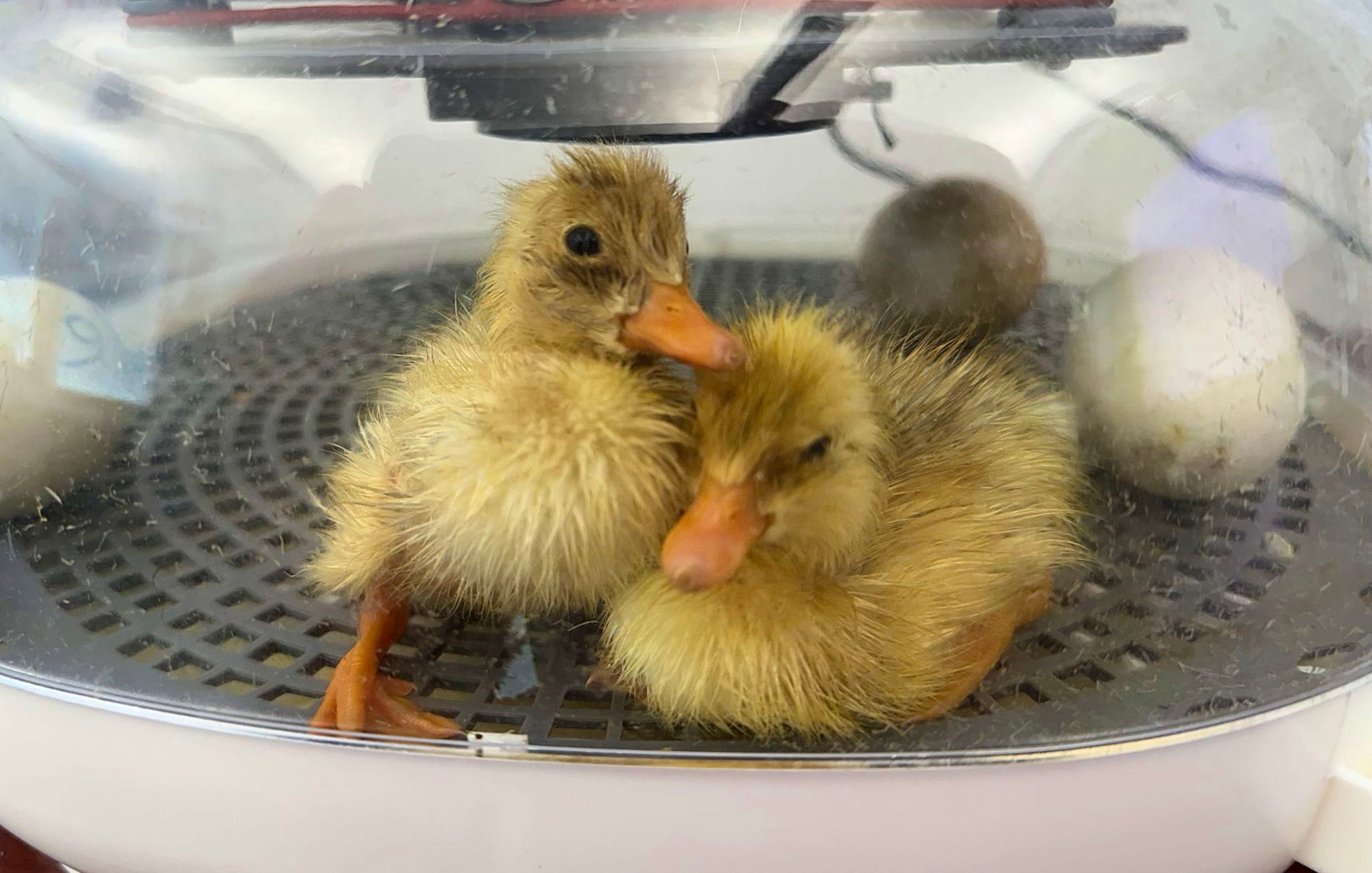
What’s yellow, fuzzy, and oh, soooo cute? Ducklings, of course!
The incubation and hatching of these cute little things is a rite of passage at Northstar Career Center where embryology lessons are hands-on.
Each year, Henrico County 4-H provides the Career Center with a dozen fertilized eggs. Students of the Veterinary Assisting program care for the eggs until they hatch into ducklings. The project starts with the students setting up an incubator to track embryo growth over a two-week period during the Spring. Using a candling technique in which they shine strong light under the eggs, they watch the shadow of embryo growth underneath. When the time is right, students witness the eggs hatch and follow their progress as they “fluff up” with feathers.

"Specifically with the Embryology project, I love to do ducks! 4H gives us all the supplies needed and work with local farmers to get eggs," says Tricia Doria, who heads up the school’s program. "My students get to name their duck if hatched. They usually almost double in size in 10 days."
Once the ducklings’ coats change from fuzz to fluff they’re ready to swim. Veterinary assisting students take the lead in teaching their fellow K-12 students and sharing their experience with the embryology project. Seated around a baby swimming pool, they take turns fielding questions about the care and feeding of juvenile water fowl.

The Veterinary Assisting program is not for the faint of heart, nor is it for every student. Not every duckling hatches from an egg and not all of those that do will survive. Some years, only a quarter of the embryos may make it. The program requires students to build tolerance for varying environmental conditions, and a willingness to deal with the dirtier side of nature such as odor and excrement.
While working with animals can be a physically and emotionally demanding job, the field is projected to grow at a rate of 19 percent by 2033, according to the Bureau of Labor Statistics. When Northstar graduates exit the program, they have real world work experience and are prepared to work in clinics, animal hospitals, and research laboratories.
When the ducklings are just ten days old, they are returned to Henrico 4-H who distributes the ducks back to local farmers.
Five Tips for Creating a Positive Learning Environment for Students with Disabilities
Five Tips for Creating a Positive Learning Environment for Students with Disabilities
Creating a positive and inclusive learning environment is essential for all students, especially those with disabilities. When students feel safe and understood, they’re more likely to do well academically, socially, and emotionally. At Northstar, we aim to foster a supportive space where students with disabilities can thrive.
Here are five practical tips for teachers to help create a space comfortable for students who learn differently.

1. Foster a Culture of Respect and Inclusion
Ensure every adult who comes in contact with the student models inclusive language and respectful behavior. At school, faculty should remain professional at all times and have a calm demeanor. When conflicts do arise between students, use them as teachable moments to promote peer understanding. Age-appropriate discussions about diversity and empathy can become an opportunity to celebrate differences and encourage students to learn from one another.
2. Create a Predictable, Structured Learning Environment
Students with disabilities often rely on clear routines to get through the day. Incorporate tools in your everyday life to help students anticipate transitions. The key is being flexible without compromising an existing structure. For example, using a visual schedule can help a student understand the order of a day’s activities, or a timer on a wall can show students how long they have to finish a task before it’s time to clean up their space. Anticipate how changes to the routine may affect mood or behavior and prepare accordingly.
3. Design a Flexible Physical Space
Educators should ensure the learning environment is able to accommodate mobility needs and minimize sensory overload. It’s important to offer as much independence as possible to students as they navigate the school building. The ability to physically change locations independently fosters confidence. Consider creating a calm corner or quiet spaces for students who need sensory breaks. Provide low lighting sources or dimmable lamps as an alternative to bright overhead lights.
4. Build Strong Relationships with Students
Take time to learn about each student’s strengths, interests, and challenges. Use positive reinforcement to encourage collaborative behavior. Evaluate how the student learns best and adapt lesson content to different formats (visual, auditory, hands-on, etc). Allow students to demonstrate knowledge in various ways and participate at their own level. For instance, if a student struggles with oral presentations, consider adapting their assignment to include a written portion or allow them extra time to practice. Patience and empathy are key to making a student feel valued at school.
5. Be Open to Growth
Every person in a student’s life has an impact. A student thrives when teachers can collaborate with parents, caregivers, aides, doctors, coaches, or other influential adults. When these people team up, they are able to share what strategies work best for the student and contribute to their social-emotional growth. Don’t forget to include the student’s opinion. Ask the student, what makes you feel successful at school? Be open to feedback while you reflect on what’s working — and adjust what’s not.
A positive learning environment doesn’t happen by accident — it’s the result of intentional, compassionate practices that put students first. By focusing on respect, structure, flexibility, and collaboration, we can help students with disabilities feel empowered and capable, both in and beyond the classroom.
Teen Volunteers Embrace Northstar with Big Hearts
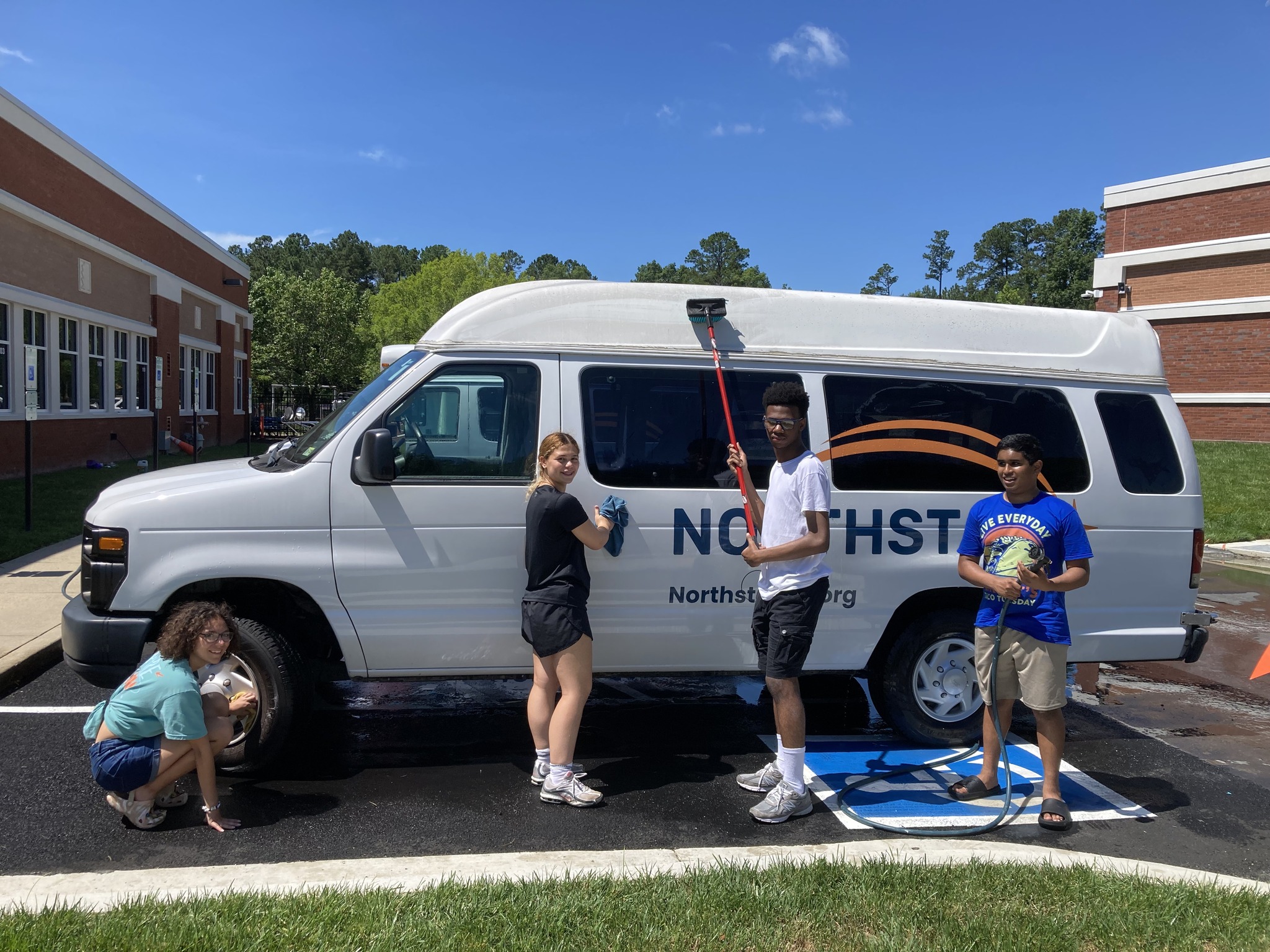
A volunteer group of six teens and two adult chaperones gather in the sweltering parking lot of Northstar’s campus on this mid-June morning. They don rags, cleaning supplies and water buckets as they detail buses and vans used to take students with disabilities into the community.
“We need someone tall to hose the top of the bus. I can’t reach up there,” the young man says as he gingerly sprays a taller teen with the hose. They both giggle.
“We need more rags, please,” a girl says to anyone who will listen.
Undeterred by Virginia’s heat and humidity, the teenage volunteers joyfully sing, laugh, and playfully coach each other as they work on the task at hand.
For three days, these teens work through a robust task list that includes painting a large storage unit, cleaning and moving furniture and landscaping. Each task addresses a need and directly impacts Northstar special education students, while helping the school reset and prepare for the upcoming school year.

“Our goal in addition to completing the tasks was to raise awareness about why individualized education is important for students with disabilities,” Director of Development Susan Herzick says, "The campers were enthusiastic about helping. They asked questions about the task, but also about the students.”
The teenage volunteer work group that visited the Glen Allen campus were among about 250 teenagers and adult chaperones who participated in Catholic Hearts Work Camp-Richmond. They hailed from Massachusetts, Pennsylvania, Delaware, Maryland, North Carolina, Michigan, Wisconsin and Ohio to strengthen their faith and help the local community, explains Program Manager Caryn Fresco, a special education teacher and tutor for over 30 years.
“We provide a safe opportunity for teens and adults from across the country to convene, love, serve, and connect not only with their faith but with organizations or deserving individuals in our metro-Richmond community,” Fresco says. The teen and adult campers eat, sleep and attend morning and evening faith-based programs at Benedictine Schools of Richmond.
The local camp is an outgrowth of the mission trips hosted by Catholic HEART Workcamp, which was founded in 1993 by Steve and Lisa Walker in Orlando, Florida. A group of teenage boys on return from a mission trip, notes Fresco, initially pitched the program to “share their faith and community service commitment” in Central Virginia.
Northstar welcomes volunteers and offers one-day and event volunteer opportunities.