
Flying High
When’s the last time you rode in an airplane? How about the last time you sat in the pilot’s seat?
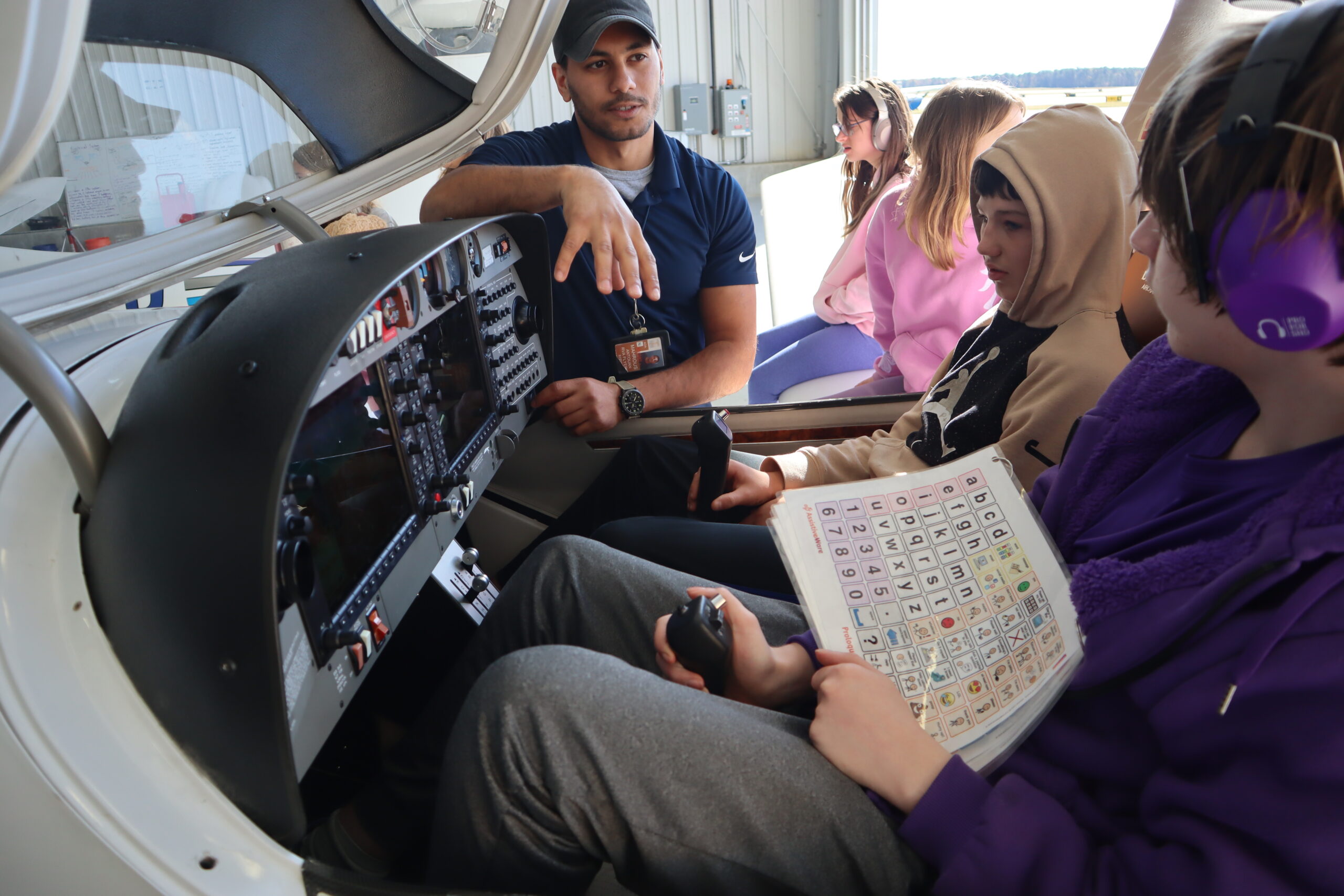
Recently, Ms. Kiki’s Geography class took a field trip to the Richmond International Airport, where they got to get up close and personal with aircraft and the processes that make it possible for us to fly.

The first stop of the field trip was RVA Flyers, a flight training center where new pilots learn the skills to earn their private or commercial license. Tony, a flight instructor who led the tour of a small hanger, assisted students in climbing into a small four-seater plane, where they learned about the many controls and buttons.
“We use these planes to teach new pilots,” explained Tony. “You need to be at 17 years old and log at least 40 hours in the air to earn your private license.”

“In the plane you could move the joystick and press the pedals and the tail would go back and forth,” said eighth grade student Laureli.
After touring RVA Flyers, students got a private tour of the air traffic control tower.
From the 6-story tower, they got a birds-eye view of the entire airport complex. Workers pointed out a side of the airport not typically shared with passengers, such as the fleet of deicing vehicles and ongoing capital improvements to RIC’s airfield.

“I really liked seeing the monitors,” said Hunter, eighth grade, about the experience. “We saw a cargo plane and a big jet landing, too.”
Between answering student questions, they shared their day-to-day tasks. As one controller shared, “The busiest times are when the weather is clear in Richmond but bad in surrounding cities, because all those planes get redirected to us!”
While watching planes take off and land, students learned the basics of how to read radar equipment and dabbled in speaking with the ICAO phonetic alphabet (Alfa, Bravo, Charlie, Delta, etc).
Northstar students love going off campus and exploring learning opportunities beyond the classroom!
Students Lead the Way in Recycling
At Northstar, learning doesn’t just happen in the classroom — it happens in the hallways, the lunchroom, and even by the recycling bins. Thanks to a student-led recycling initiative, our middle school students are taking the lead in reducing waste across campus while gaining valuable vocational and life skills.
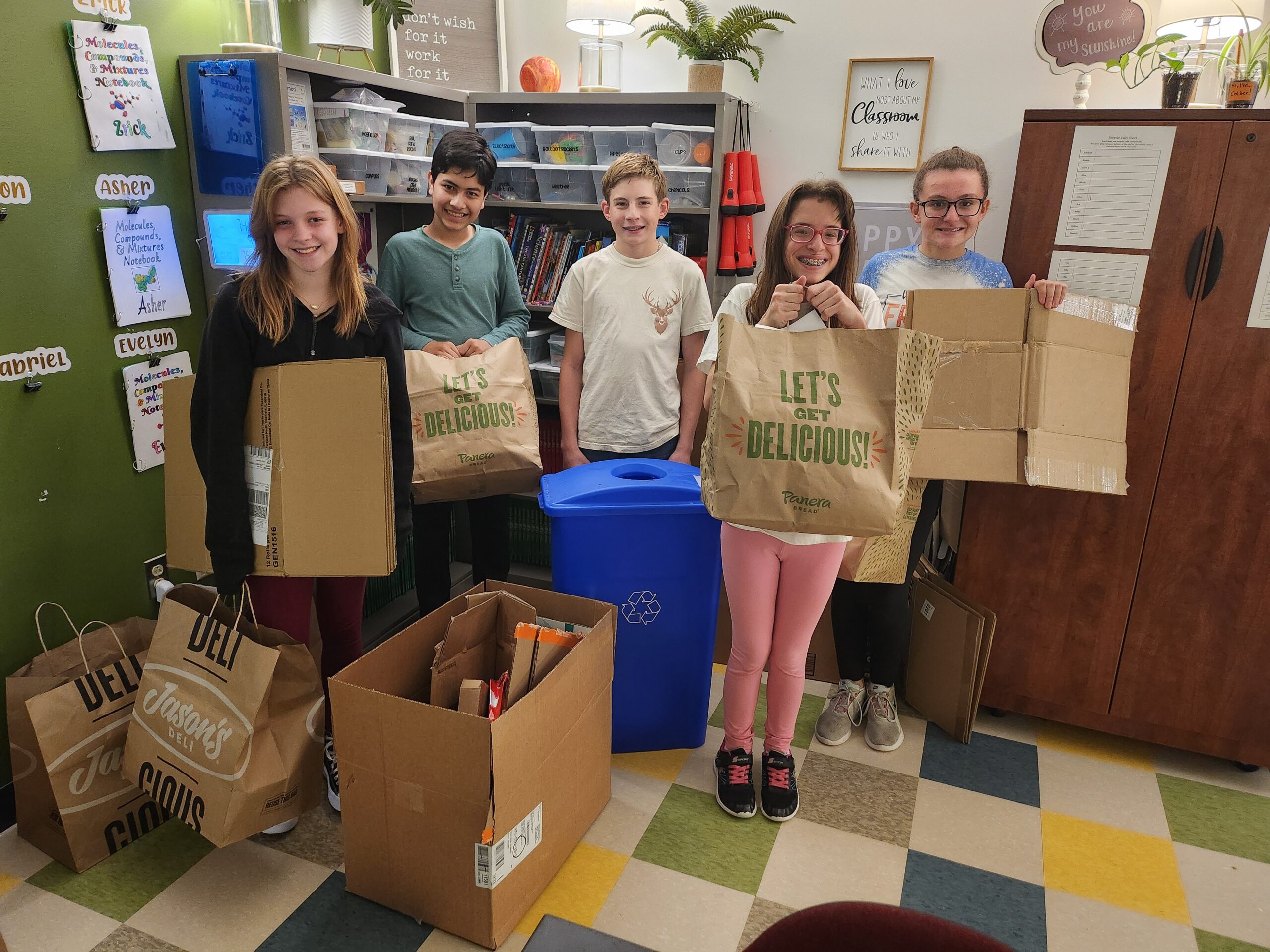
Led by middle school science teacher Isabel Futterman, the program has become part of both the curriculum and the culture at Northstar. Each week, students collect recyclable items — plastic bottles, paper, and cardboard — from classrooms and common spaces. They sort, organize, and prepare the materials for transport to local recycling centers, turning what could have been waste into a lesson in responsibility and environmental stewardship.
Recently, the program received a boost through a Green Grant application. This helped purchase new recycling bins, including a triple-sort station for the new gym and community room. These additions make recycling even more accessible for students and staff. The multiple locations remind us that sustainability is everyone’s responsibility.

“Hooray!” Ms. Futterman commented about the update, “Students now have sorting bins across campus for cans, bottles, and paper products. It’s a small step that makes a big difference — and it’s led by them.”
The impact is already visible. From the office to the library to the lunch room, new blue and grey bins are in place, giving students a hands-on role in keeping our school green.
The program also gives students the opportunity to hone their social skills. When visiting offices and classrooms to collect bins, they practice proper entry etiquette. This includes knocking politely, waiting for the okay to enter, and asking if they can step in to take care of this week’s recycling.
For our students, this initiative goes beyond recycling. It’s about building executive function skills like organization, planning, and teamwork. It’s about practicing leadership and community service. And it’s about recognizing that even small actions (like choosing the right bin) can add up to meaningful change.
At Northstar, we are proud of the way our students are learning to care for the world around them, and we look forward to seeing this program grow. After all, sustainability is not just a lesson for today — it’s a skill for life.